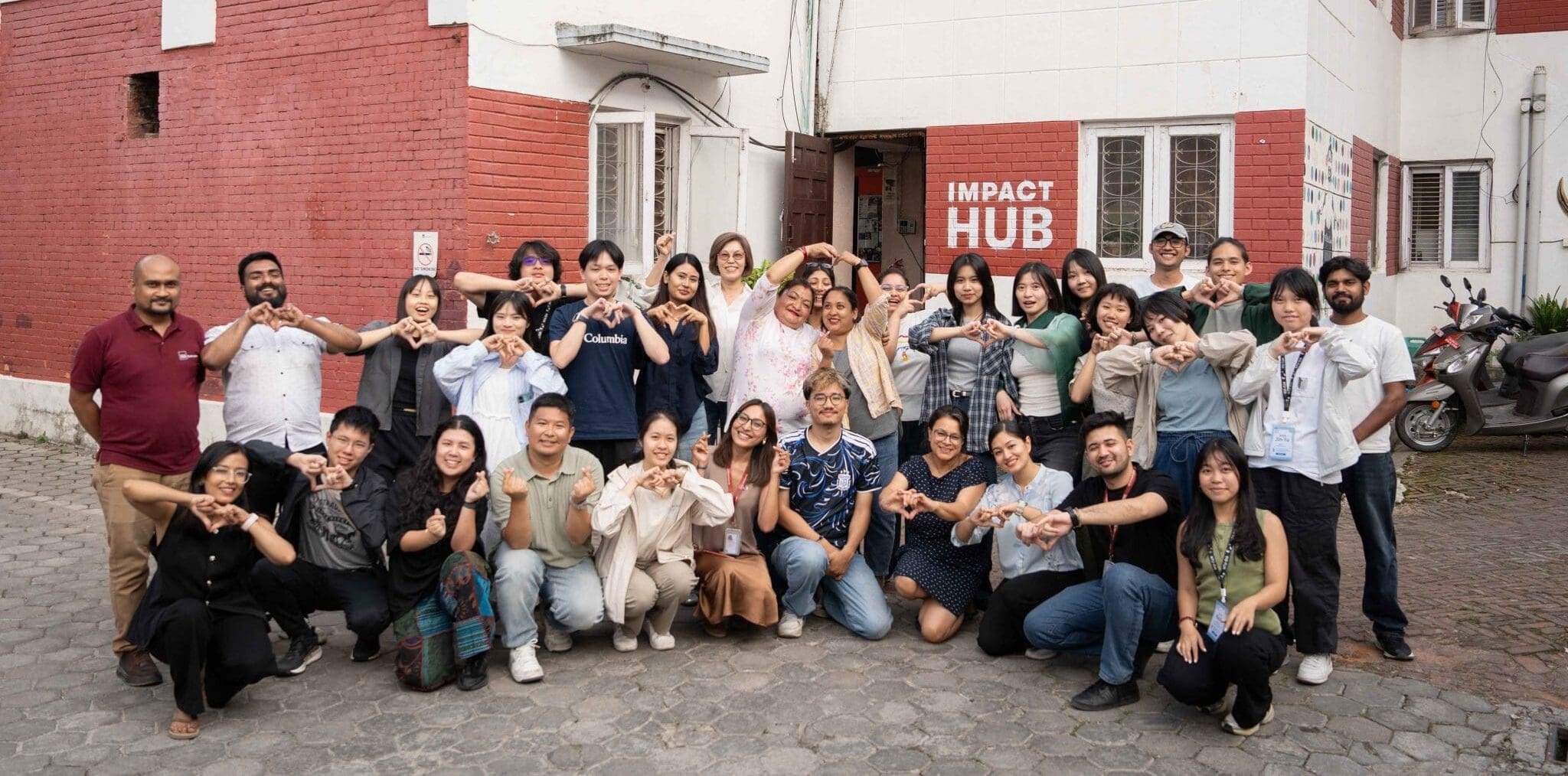
Over the past three months, entrepreneurs participating in the Recycling and Upcycling (RU) Business Incubation Program and Post Incubation Support have been on a journey of learning, collaboration, and innovation. Through masterclasses, personalized coaching sessions, and peer exchange, participants have strengthened their ideas and developed the skills needed to build sustainable RU enterprises in Pokhara Metropolitan City.
Selected through a competitive application review and interview process, the participants from two cohorts, including aspiring entrepreneurs, business founders, and Entrepreneurs with Disabilities (EwDs), have engaged in a structured incubation journey designed to transform innovative ideas into viable and impactful businesses.
Through seven masterclasses delivered between April and June 2026, participants explored Human Centered Design, business modelling, financial planning, legal and compliance, marketing and branding, and business roadmap development, while receiving personalised coaching support throughout the incubation journey.

Laying the foundation
The journey began with orientation and onboarding sessions as the first masterclass, conducted on April 27, 2026 for Cohort 1 and April 29, 2026 for the EwD Cohort. Facilitated by the Impact Hub Kathmandu team and the UNDP GCRU team, the session introduced participants to the objectives of the Green Job Creation through Recycling and Upcycling (GCRU) Project, the incubation process, and one another, fostering a collaborative learning environment from the outset.
The first technical learning session (Masterclass 2) focused on Human Centered Design (HCD), conducted on April 27-28 for Cohort 1 and April 29-30 for EwD Cohort, helping participants better understand user needs, identify challenges, and define clear problem statements. Through interactive exercises, entrepreneurs learned to develop solutions grounded in real-world needs and experiences, ensuring that their business ideas were both relevant and impactful.
Strengthening Business Fundamentals
Building on this foundation, the Business Model Canvas and Financial Management with Feasibility Plan masterclasses were conducted in May 2026 across both cohorts. The Business Model Canvas session, held on May 13 2026 for Cohort 1 and May 14 2026 for Cohort 2, guided participants in structuring their business ideas by mapping core business components such as value propositions, customer segments, revenue streams, cost structures, and key activities. This helped entrepreneurs clearly visualize how their ideas/ ventures create, deliver and capture value.
Complementing this, the Financial Management with Feasibility Plan session, also conducted on May 13 2026 for Cohort 2 and May 14 2026 for Cohort 1. The session strengthened participants’ understanding of financial planning and operational viability for waste-based enterprises. The session covered pricing strategies, cost estimation, feasibility assessment, and regulatory considerations in Nepal, enabling entrepreneurs to assess and refine the financial sustainability of their business ideas.
Building Sustainable Enterprise
June focused on strengthening the operational and strategic aspects of entrepreneurship. The Legal and Compliance masterclass, conducted on June 14 and 15, 2026 for Cohort 2 and 1 respectively, introduced participants to key registration processes, regulatory requirements, intellectual property rights and compliance obligations relevant to establishing and operating recycling and upcycling businesses in Nepal, with a particular focus on Pokhara Metropolitan City
This was followed by the Marketing Strategies and Branding masterclass on June 15-16, 2026, where entrepreneurs explored practical approaches to building strong brand identities, reaching target customers, positioning their products and services, and effectively communicating the value of their products and services.
The learning journey concluded with the Business Roadmap Development session on June 16, 2026 for Cohort 2 and June 17, 2026 for Cohort 1. Drawing on the knowledge gained throughout the incubation program, participants developed business briefs, refined their business plans, and mapped out growth strategies in preparation for Demo Day.

Learning Beyond the Classroom
The incubation program benefited from the expertise of experienced facilitators and consultants who guided participants throughout the learning journey. Drawing on practical industry experience and technical knowledge, they supported entrepreneurs in refining their ideas, addressing business challenges, and building stronger foundations for sustainable growth.
Complementing the masterclasses, one-on-one business, technical and financial coaching sessions provided tailored support in business planning, technical challenges, financial management, and operational decision making. The coaching sessions played a critical role in helping entrepreneurs to receive targeted feedback and apply their learning directly to their own ventures.
Looking Ahead
As participants prepare for Demo Day, they continue to strengthen their business briefs and pitch decks while refining their ventures for the next stage of growth. Through this combination of training, coaching, and inclusive support, the Recycling and Upcycling Business Incubation Program continues to contribute to green job creation, circular economy development, and a more inclusive entrepreneurial ecosystem in Pokhara Metropolitan City
As the incubation journey progresses, we look forward to seeing these entrepreneurs transform their ideas into thriving enterprises that create environmental, social, and economic impact within their communities.