Imagine riding your motorcycle or scooter one ordinary day, when suddenly the road beneath you gives way. You wake up in a hospital and the body you knew doesn’t quite work the same way anymore. Your fingers won’t flex the way they used to. Your wrists won’t bend. Getting to the dining room, or even the bathroom, is no longer something you can do on your own. Writing a note, holding a glass of water, eating a meal all of it now depends on someone else being there to help. Even something as small as using your phone becomes a task you can’t finish alone.
This is the reality many people face after a spinal cord injury, and it was the reality for one of our need knowers (The project refers to people with lived experience of disability as “need knowers” people whose everyday experiences help identify what assistive technologies are actually needed), who was going through rehabilitation at the Spinal Injury Rehabilitation Centre (SIRC), Sanga. Despite completing his rehabilitation exercises, he hadn’t regained enough fine motor control to grip and hold his own phone. He couldn’t make a call without asking a caretaker for help. Someone had to prop the phone up just so he could watch the news, and someone else had to scroll through it for him if he wanted to check Facebook.
He is one of the many people at SIRC who, after a deeply traumatic experience, are also having to relearn what independence looks like.
It’s this gap that led to our project, Empowering Independence through Local Assistive Technology Innovations for Persons with Disability due to Spinal Injury. It’s a research and development initiative run in collaboration with Spinal Injury Rehabilitation Centre, Sanga, and it began this February, funded by the Royal Academy of Engineering under the UK Aid-funded AT2030 Programme, following an award granted in December 2025.
The idea behind the project is to design and build assistive devices and therapy tools locally, so that need knowers can actually get their hands on them.

So far, we’ve developed 12 types of assistive devices, and need knowers at SIRC are already using them and sending us feedback that shapes how we refine each one. Among the devices are a mobile phone holder, a zipper assist, writing aids, feeding aids, drinking aids, and tools that help with screen touch and typing. Now the need knowers who have only limited wrist mobility could feed and drink water themselves with the help of these assistive devices. They can participate in social interactions by using the mobile phone holder and screen-touching and typing aids. Apart from that we are also prototyping with a wheelchair-attachment for a go-pro stand that could help one of our need knowers vlog in his journey and a reaching aid for reaching out and grabbing objects that are far from the wheelchair.
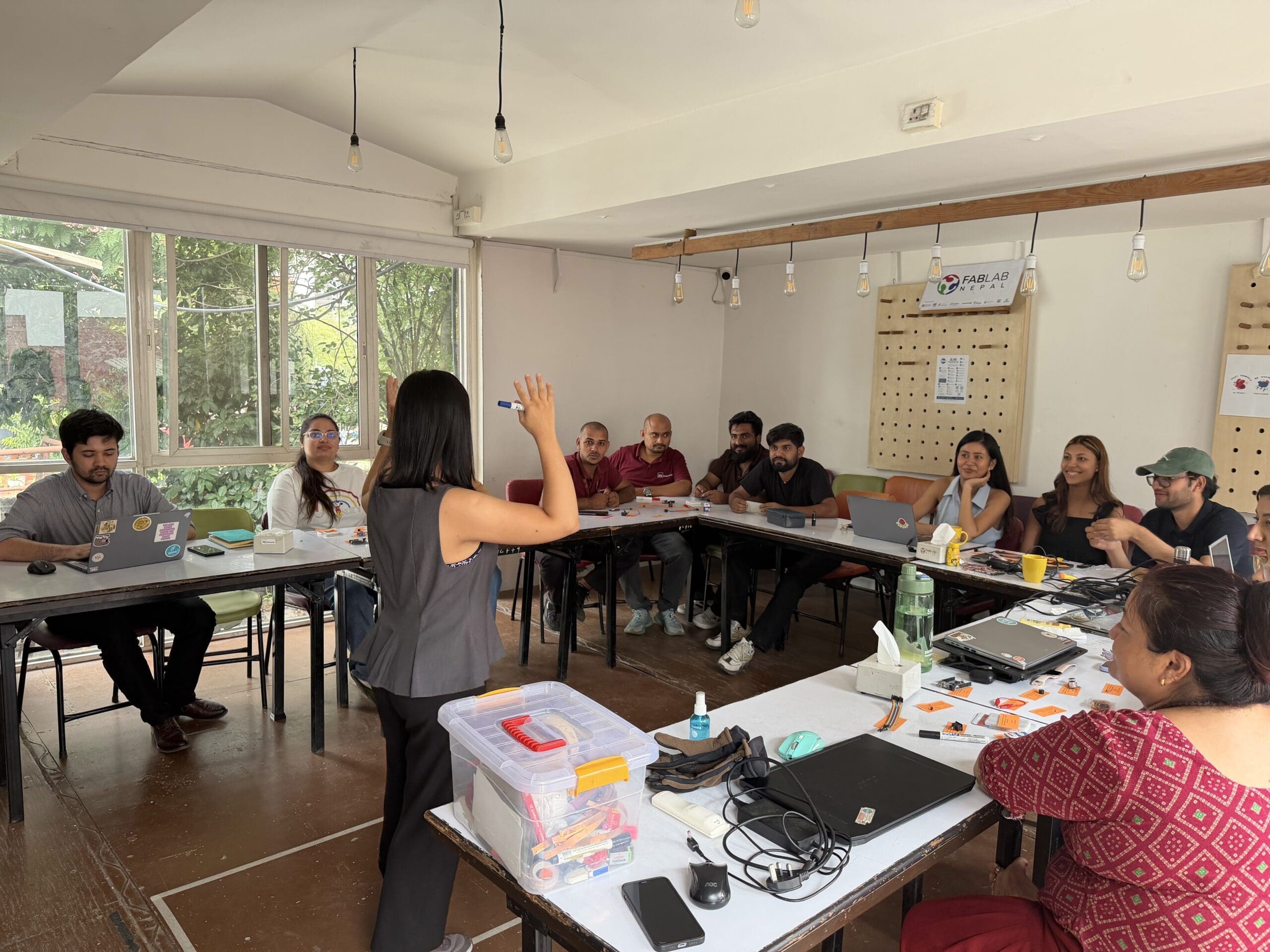
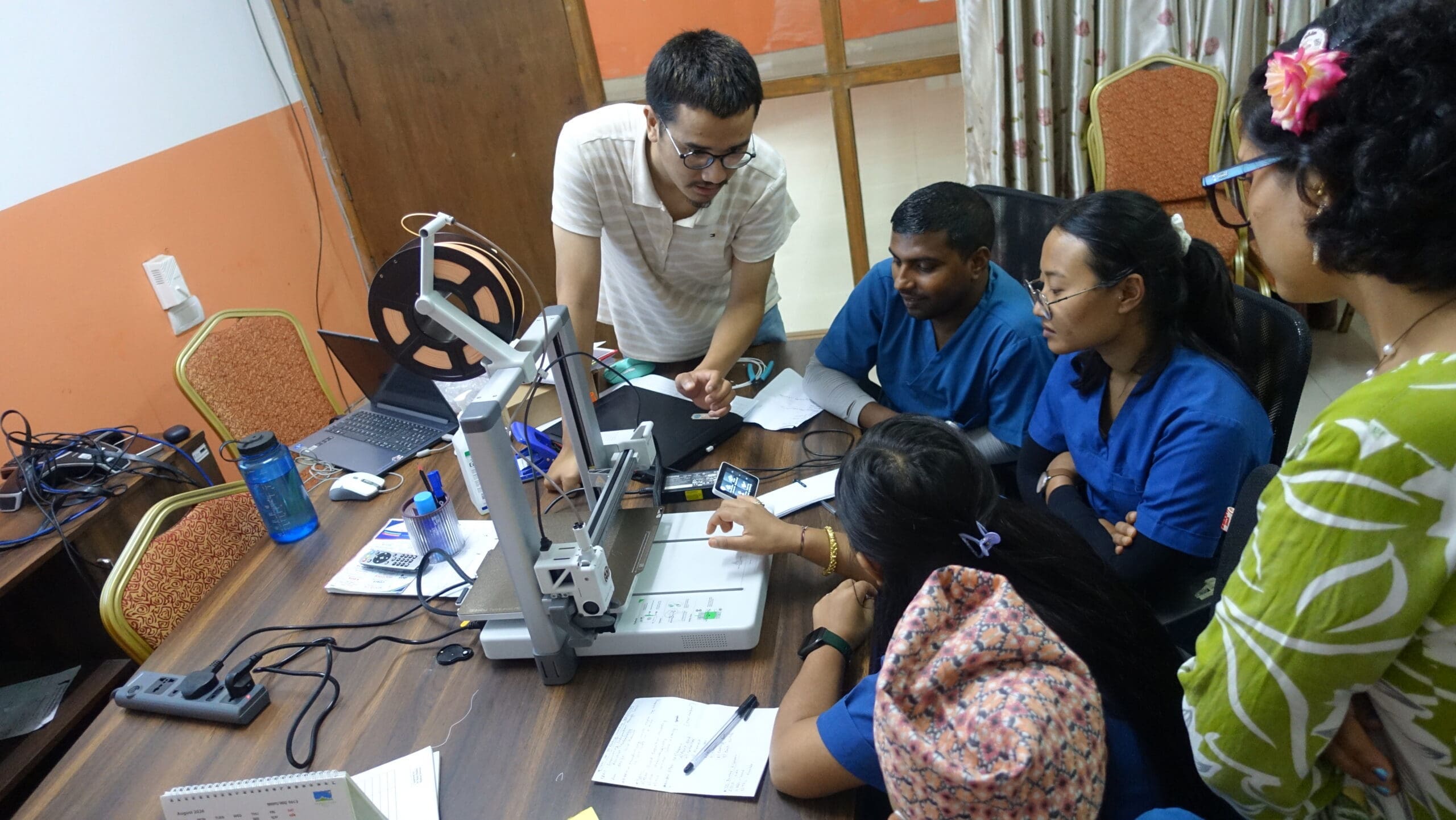
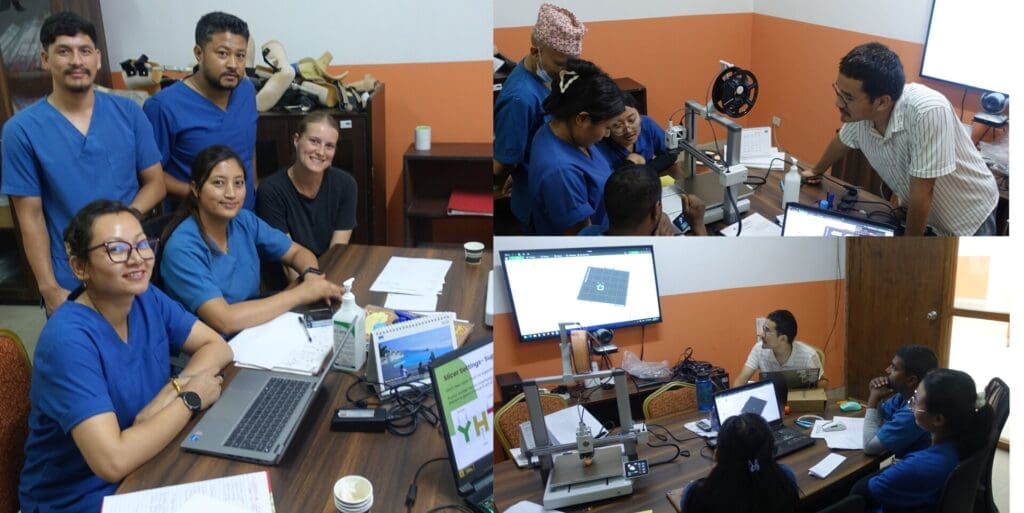
Just as important as the devices themselves is making sure they can keep being made. As part of the project, we’ve been training SIRC’s own staff in basic 3D printing, so that once the project ends, they can continue printing and building these devices in-house. So far, that training has reached 9 occupational and physiotherapists, and 1 prosthetics and orthotics specialist.
For the need-knower who inspired our mobile phone holder, the change may seem small to someone else, but it represents something much bigger: the ability to do certain tasks independently and having more control over day-to-day activities.
With the phone holder secured to his hand, he can now hold and use his phone without waiting for someone to position it for him. He can access his phone when he wants to, participate in conversations, watch the news, and connect with people. What was once a simple everyday activity that required another person’s assistance has become something he can begin to do for himself.
As he put it:
“ अहिले त म आफैले फोन गर्न सक्छु अनि आफैले tiktok , Facebook चलाउन सक्छु। पहिले आफ्नै mobile banking पनि चलाउन अरुलाई भन्नु पर्थ्यो , अहिले आफै चलाउने भएको छ।” (Translated: “Now I can make phone calls by myself, and I can use TikTok and Facebook on my own. Before, I even had to ask others to use my mobile banking for me. Now I can use it myself.”)
For us, this is what assistive technology is about. It is understanding a person’s needs, designing around their reality, and creating tools that give them back a measure of choice, participation, and independence.
Through Empowering Independence through Local Assistive Technology Innovations for Persons with Disability due to Spinal Injury, we are committed to working alongside people with spinal injury, therapists, and rehabilitation professionals to develop solutions that are locally made, accessible, adaptable, and shaped by the people who use them.
But the project does not end with developing 12 devices. By building local skills in 3D printing and assistive-device fabrication within SIRC, we hope to leave behind more than products. We want to help establish the knowledge, tools, and capacity to keep identifying needs and creating solutions long after the project ends.
Because independence can begin with something as simple as holding a phone, lifting a glass, writing a note, or reaching for something without asking for help.
And sometimes a small device can make a big difference.