Inside our Maker’s Fun Electronics Session!
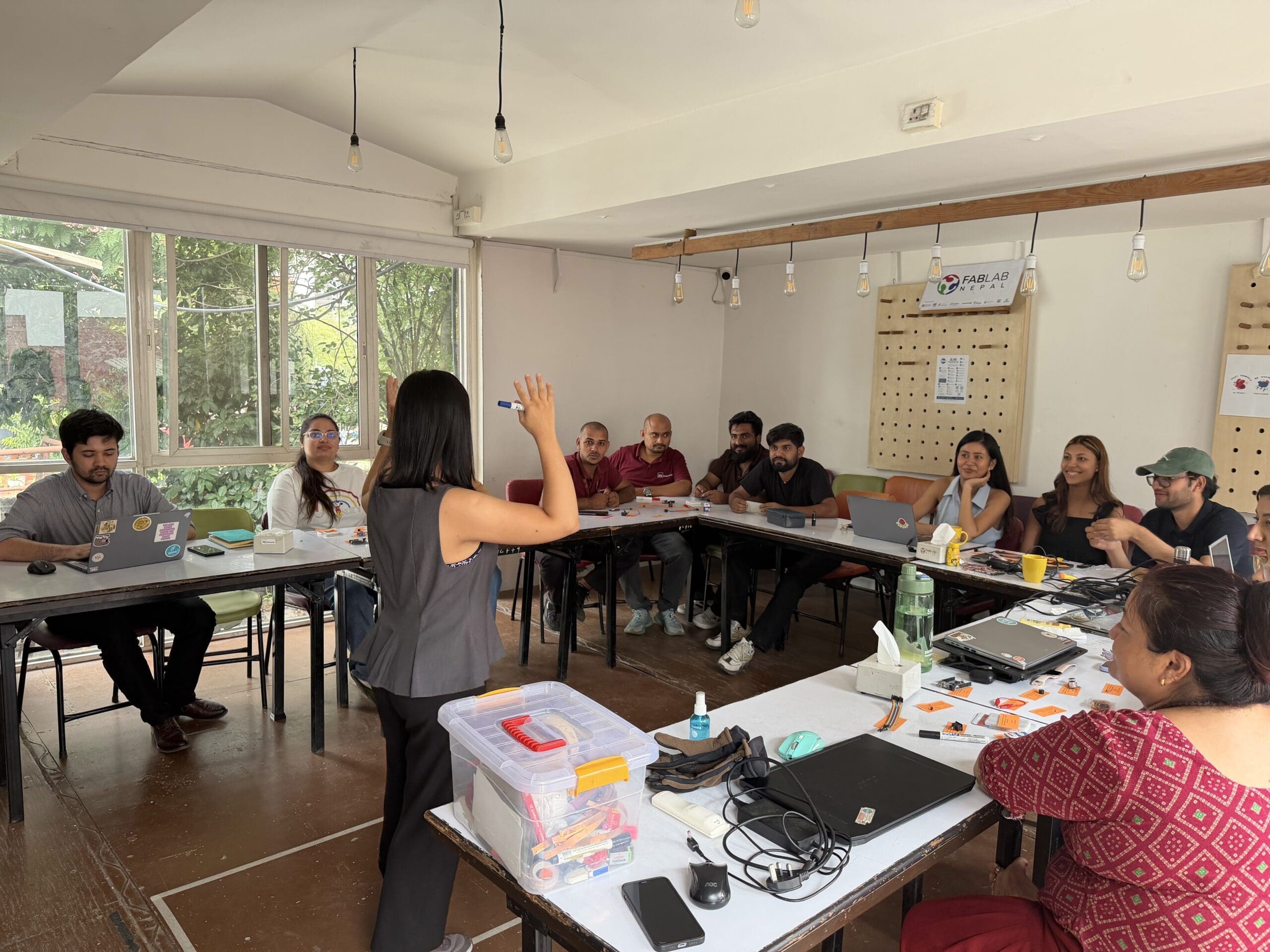
Electronics is often seen as something technical, complicated, or for people with a robust foundation in science and technology. What if learning electronics could be fun and begin with a game, a little curiosity, and the readiness to try? That was the idea behind our internal Maker’s Fun Electronics Session at Impact Hub Kathmandu, held on 21 August 2026, a practical experience designed to make electronics approachable, interactive, and exciting. I had the opportunity to lead the session with Denjing Tamang, Technical Officer, who co-facilitated the activities. We motivated participants to learn by doing, experimenting, making mistakes, and figuring things out together, instead of starting with lengthy explanations or technical terminology.
A circuit board, wires, electronic components, or even a simple LED can seem intimidating when you feel that you need to understand electronics before you can work with them. For this session, we wanted to turn that idea around. You do not need to know everything before you start making. We designed the session around an equity based STEAM pedagogy, with no assumed prerequisites. Participants could start from wherever they were, ask questions, experiment, collaborate with others, and gradually build their understanding. Our goal was simple: make learning approachable, encourage curiosity, and show that anyone can learn by doing.
What Happened in the Session?
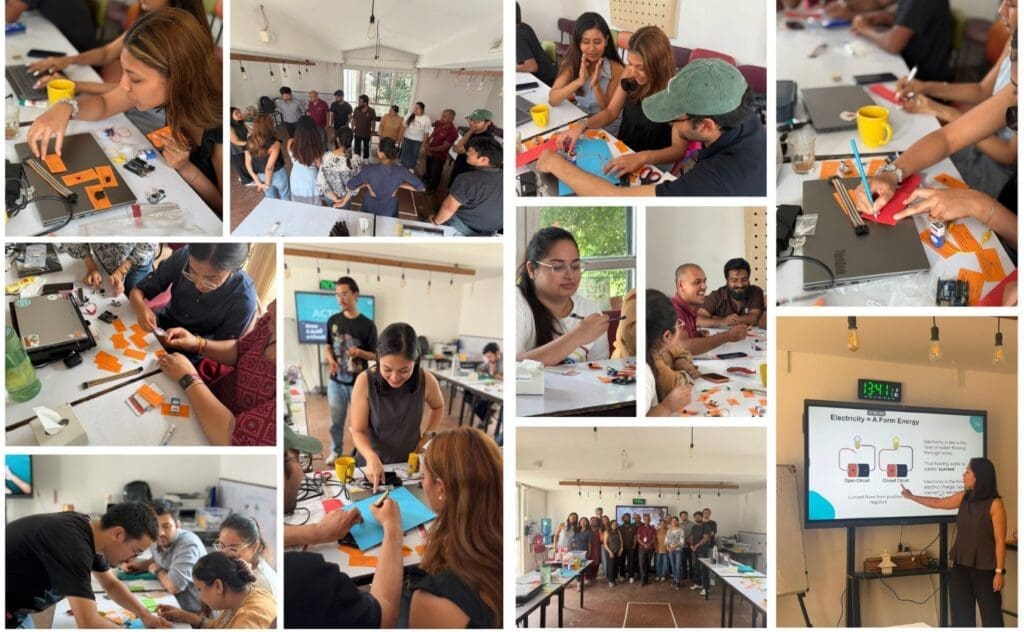
The session included various interactive activities that introduced participants to basic electronics while encouraging curiosity, creativity, teamwork, problem solving and critical thinking. As an internal training, the session brought together team members from different backgrounds and levels of responsibility, to build a shared understanding of the STEAM based approach we aim to deliver. We did not start with a textbook or a technical explanation. We began with a game. Our first activity was human circuits, where participants were themselves part of a circuit. Through movement and interaction, we introduced the basic idea of how a circuit works. The next step was to identify the tools and components. This introduced technical vocabulary in a much more engaging way. The next step was to apply what we learned. This created a natural progression:

First, we played. Then, we identified. Finally, we made it. Participants could immediately connect what they had learned in the game with what they were doing with their hands. And, of course, there were moments when things did not work. An LED would not light up. A connection would be in the wrong place. Someone would ask, “Why isn’t this working?” These moments became opportunities to troubleshoot, test ideas, learn from mistakes, and help one another. The focus was not on getting everything right the first time, but on developing the confidence to try, observe, adjust and try again.
When Learning Becomes Play
Activity-based learning made technical concepts easier to understand and created an energetic learning environment. There was laughter, teamwork, experimentation and plenty of “Oh, now I understand!” moments. For me, these moments show why STEAM learning can be so powerful. Science and technology become connected with engineering and mathematics through making and problem solving, while creativity and communication bring in the arts and human side of learning. The result is not simply learning how a circuit works. It is developing the ability to think, create, collaborate and solve problems. For me, one of the most rewarding parts of the session was seeing the change in participants as they moved from curiosity to confidence.
Takeaways from the Session
We collected feedback from participants through feedback forms. It was really interesting how participants really enjoyed the engaging session. One of the participants said, “The session was very interactive and engaging. It really connected to solving practical problems in daily life which made us think critically. It gave us an opportunity to understand daily electronic devices at home as well. Another participant said, “ The session was quite informative and it helped me understand the concepts in a very clear, and practical way. The light bulb game was very fun and engaging, I loved it!” You do not have to know all the technical terminology before picking up a wire. You do not need to be an expert before building your first circuit. Sometimes, all you need is an opportunity to try.
Our approach created a safe space to participate. The hands-on activities gave them the opportunity to experiment. The challenges encouraged them to think critically and work together. Most importantly, the session showed that learning does not always have to begin with a long explanation. At Impact Hub Kathmandu, our Makerspace provides a space for people to explore, experiment and turn ideas into something they can see and touch.
Ready to experiment, make, and learn? Visit the Impact Hub Kathmandu Makerspace and stay connected for our upcoming hands-on sessions.