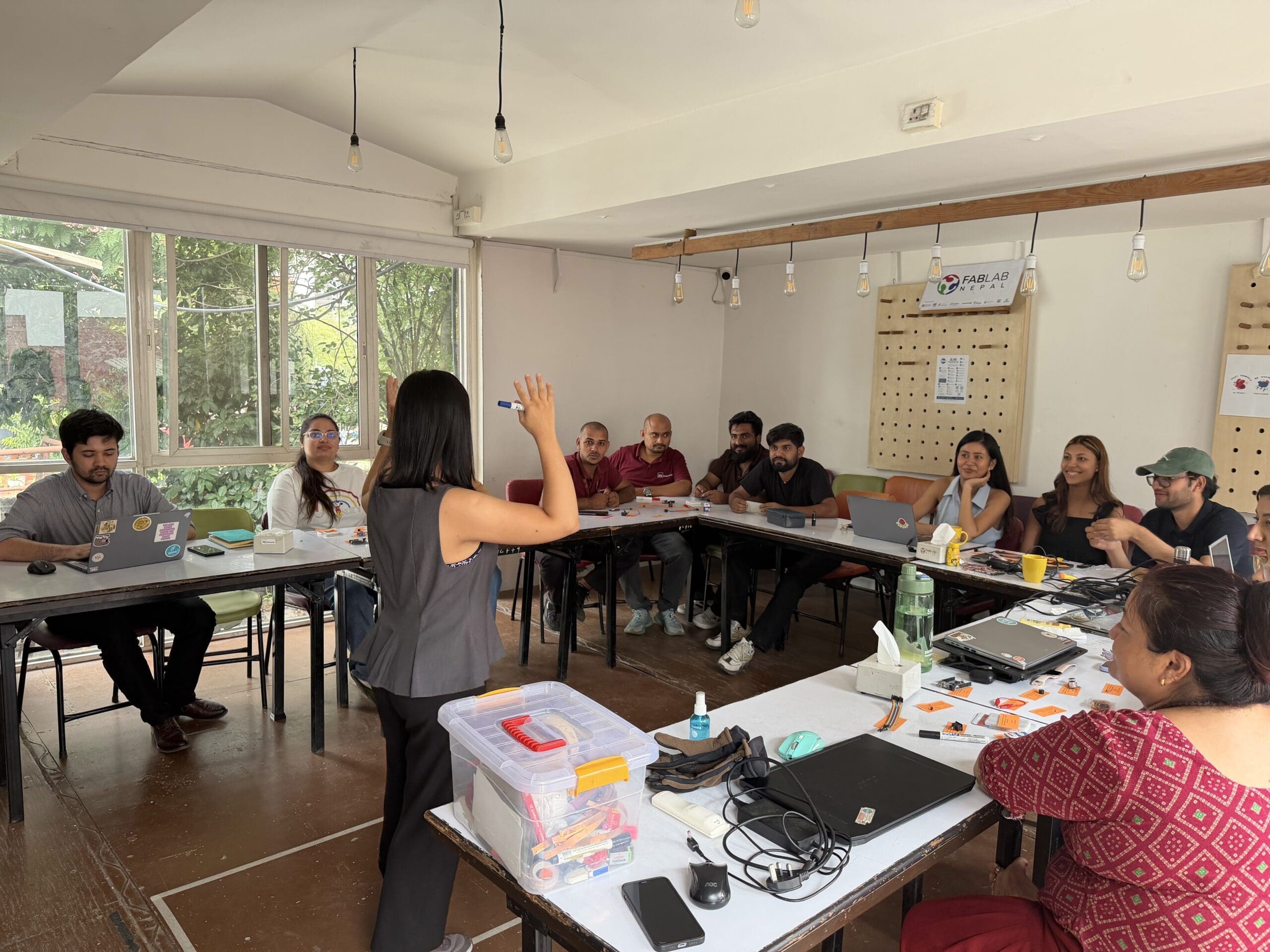
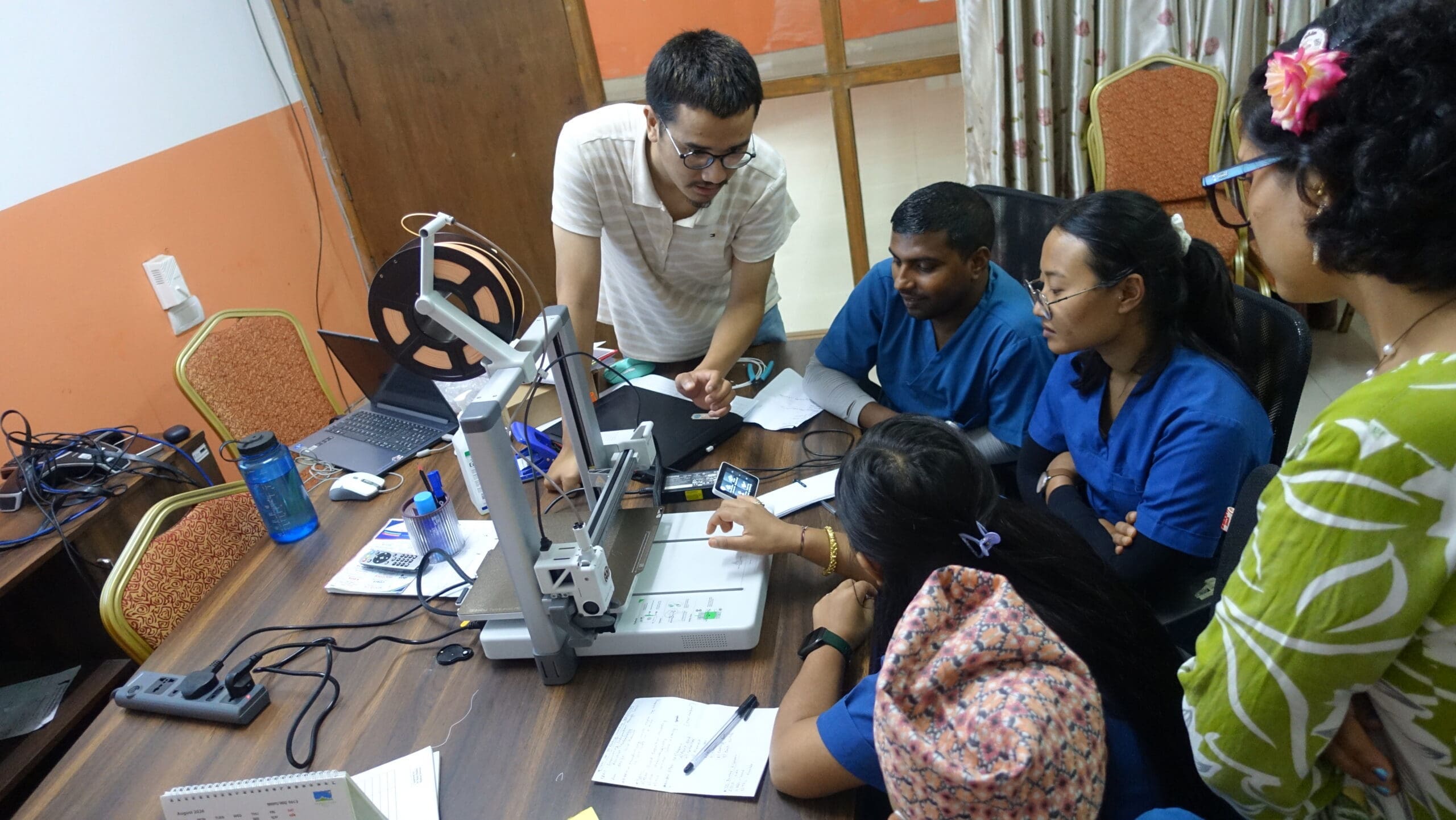
We believe innovation grows fastest when people, ideas, and opportunities come together. Over the past months, co-designed with Impact447, Elevate Nepal, our flagship initiative under the Emerging Technology Ecosystem Acceleration Program (ETAP), supported by the World Bank and KWPF, has become a living example of what collaborative innovation looks like in practice. The initiative was launched to strengthen Nepal’s rapidly expanding emerging tech, especially drone ecosystem by supporting businesses, developing skilled youth, and encouraging stronger partnerships between government, academia, civil society, and industry. Today, we are excited to share what we have achieved so far, what is currently underway, and where this journey is headed next.
Our work began by creating broad visibility and curiosity around drones. In July and August, a first-ever two-day Drone Showcase was hosted, which welcomed 558 visitors, 13 companies, government representatives, students, and media. For many, it was their first hands-on experience with drone technology. Designed as an interactive event, not a traditional expo, it featured partners like Pathao, TingTing, and Karkhana, making drones accessible and engaging. Demonstrations, panel discussions, and conservation stories highlighted how drones are already supporting wildlife monitoring, forest fire detection, community safety, mapping, filmmaking, and early logistics in Nepal.

The Showcase also served as a selection ground for the next stage of the program. Of the 15 companies that applied, eight were chosen for an intensive business mentorship journey. Judges identified companies like Drone Sewa, the Research Center for Low Altitude Economy, Climate Risk and Resilience Lab, Salt Route Excursions, Bhugol Technologies, and GarudX as strong innovators with high potential. Established companies such as Geovation and Amit Consultants were noted as ready-to-scale businesses capable of expanding their services further with the right strategic support.
Alongside the Showcase, we initiated the Drone Fundamentals Training, an essential step in building a skilled future workforce. From 234 applicants, 50 young individuals aged 18–25 were selected, and 47 successfully completed the two-week training. The cohort represented Nepal’s rich diversity, women, Dalit, Janajati, Muslim, LGBTQIA+, and youth from different social and geographic backgrounds. For most of them, drones were a new world. Over ten days, they learned about basic components, flight principles, safety rules, drone regulations in Nepal, mapping, weather, risk management, and hands-on flying. Many flew a drone for the first time. What stood out most was their eagerness to learn and grow, an encouraging sign for the country’s long-term talent pipeline.

Following these foundational activities, Elevate Nepal transitioned into its more intensive and future-oriented phase: the Business Mentorship Program and the Paid Traineeship Program. Eight selected companies are now participating in a three-month mentorship journey designed to strengthen their strategic capabilities. They have completed masterclasses and coaching sessions on Human-Centered Design, Monitoring & Evaluation, Regulatory Compliance, Branding and Marketing, Strategic Planning, and Investment Readiness. These sessions, led by experts in the field, are helping them refine business models, improve financial discipline, articulate value propositions, understand legal frameworks, and prepare for investor engagement. Each team is also preparing to deploy a seed grant to expand their innovation. Their plans include purchasing advanced drones, building repair ecosystems, developing VR learning tools, strengthening data analytics, and investing in R&D.

At the same time, 20 (now 19) trainees from our Drone Fundamentals Training have entered paid internships across 12 leading organizations working in this sector. These internships are not just placements, they represent Nepal’s first structured effort to create meaningful employment pathways in the drone industry. For many of these young people, this is their first professional step into a technology-driven career. Companies have shown great commitment, with some even expressing interest in retaining interns long-term beyond the program.
As we look ahead, Elevate Nepal’s next few months will focus on ensuring that businesses have stronger foundations, deploy their grants responsibly, and become role models within Nepal’s drone sector. Traineeships will continue, with ongoing support and monitoring to ensure quality learning and practical exposure. And most importantly, the program will work to deepen relationships across the ecosystem bringing regulators, innovators, educators, and communities into more structured dialogue. Because the drone ecosystem can grow only when its challenges such as regulation, safety, public awareness, and access are addressed collectively.
Impact Hub Kathmandu and Impact 447 are proud of how Elevate Nepal has evolved to a national platform that empowers youth, strengthens businesses, and sparks curiosity across the emerging drone ecosystem. What began as a showcase is now working on a future where drones support agriculture, conservation, public health, education, entrepreneurship, and disaster resilience. Together with our partners and the broader innovation community, we look forward to a Nepal where drones are not just flying machines but tools that uplift people, protect nature, and expand possibilities.