Bagmati Cohort 2 – Application Launch, Sourcing and Selection
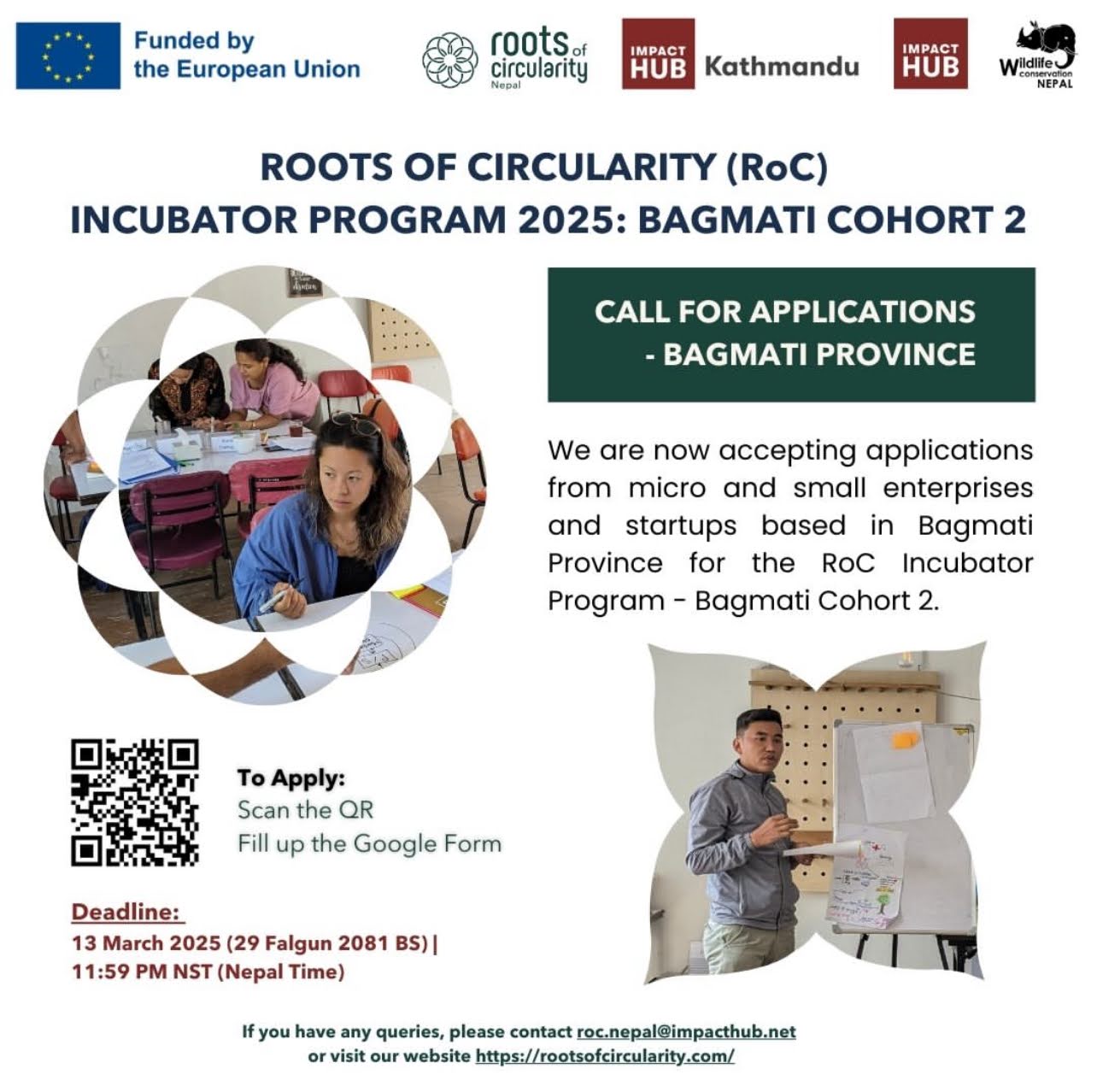
Impact Hub Kathmandu (IH KTM) launched the applications in February for the Roots of Circularity (RoC) Incubator Program funded by the European Union, where we accepted applications from different micro and small enterprises and startups based in Bagmati Province for the Incubator Program – Bagmati Cohort 2.
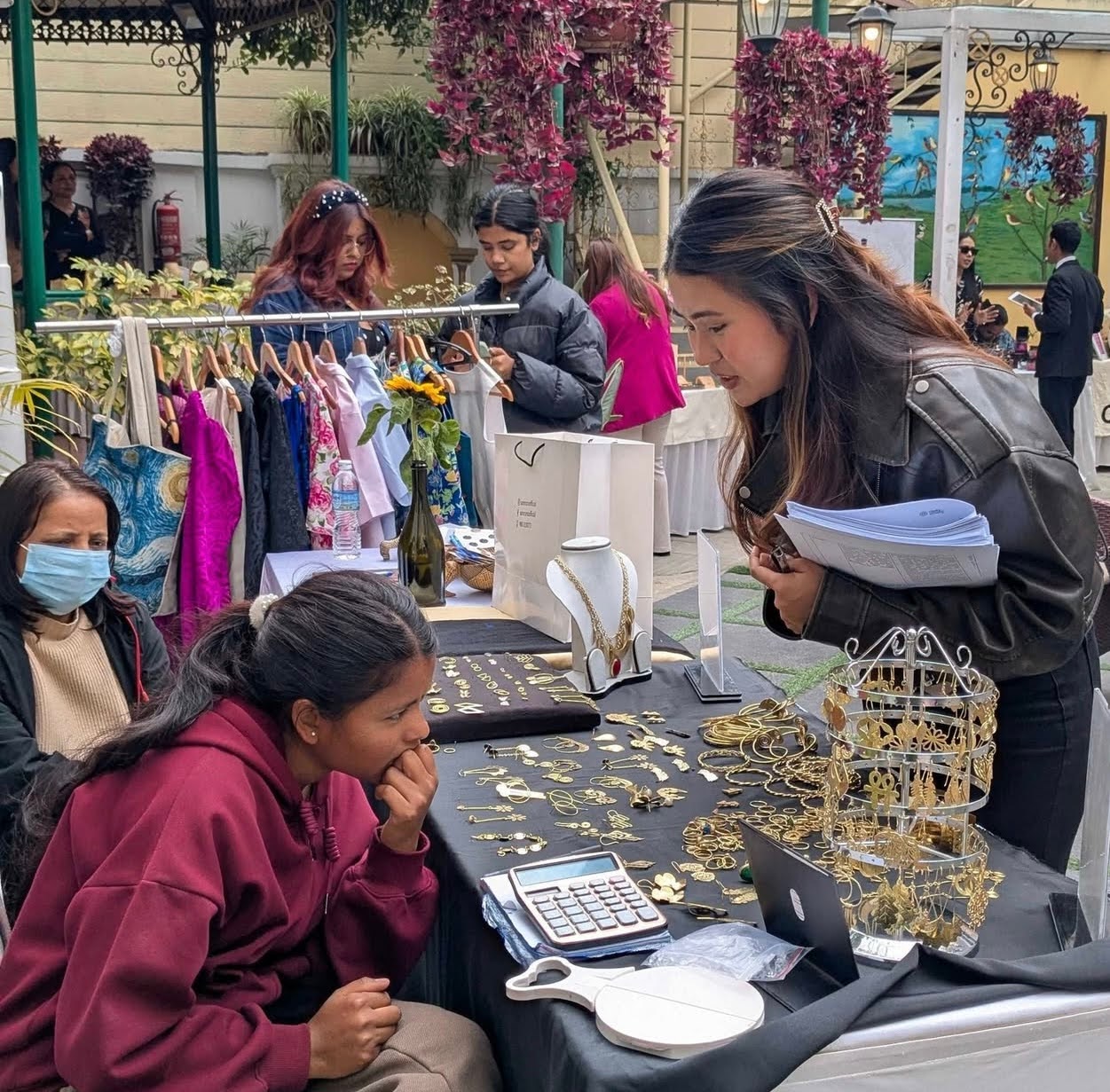
As a part of our outreach and sourcing applications for RoC Bagmati Cohort 2 Incubator Program, and in celebration of International Women’s Day, IH KTM exhibited at the vibrant Women-led Haat Bazaar at Maya Manor Boutique Hotel. The team connected with many women entrepreneurs and shared with them about the upcoming Roots of Circularity (RoC) Incubator Program for the MSMEs based in Bagmati Province.
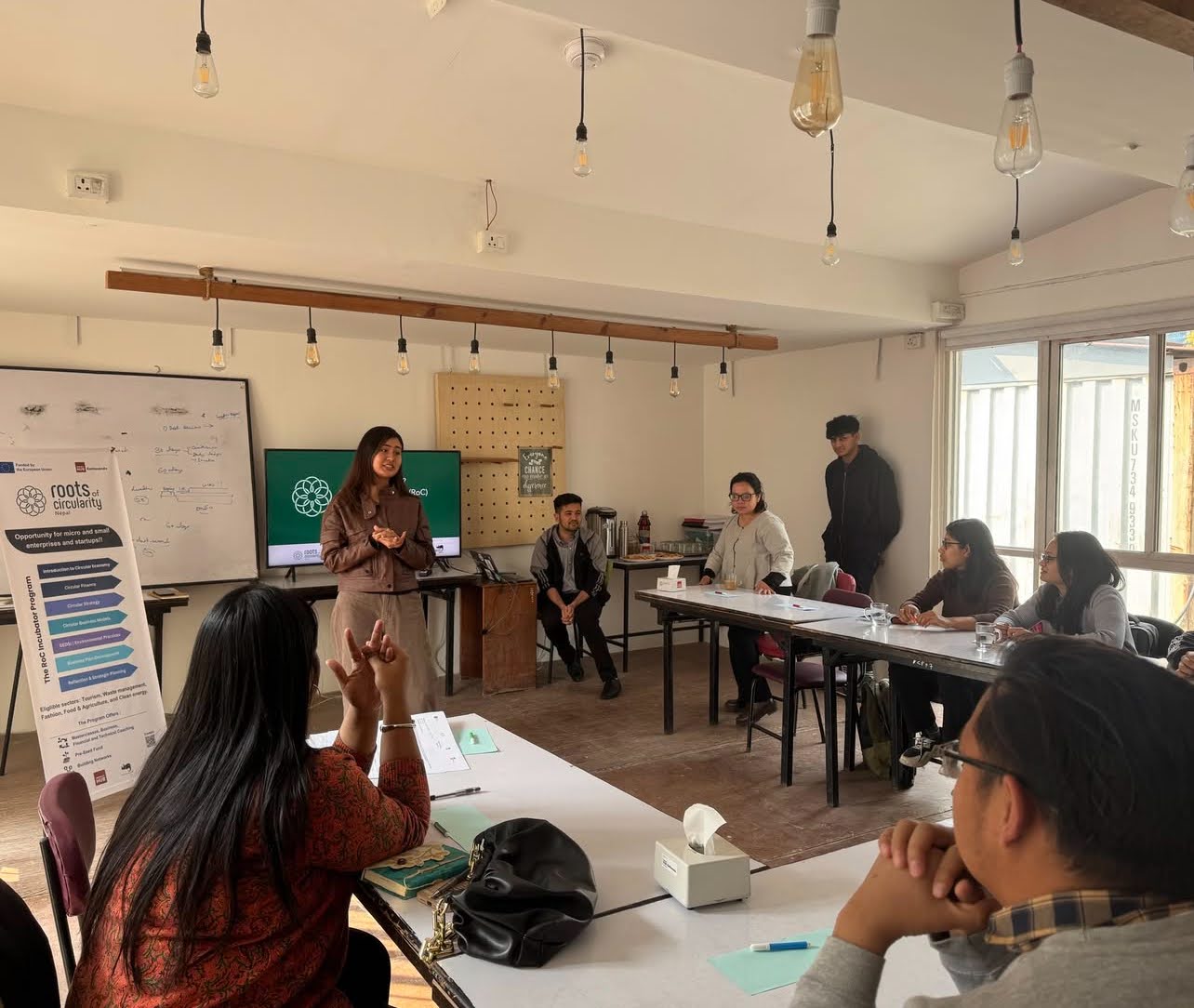
Moreover, IH KTM organized “What’s Hub” on March 10, 2025, a regular community gathering aimed at fostering connections and meaningful dialogue focused on the Roots of Circularity (RoC) Incubator Program, its core objectives, engaging participants emphasizing innovative approaches to sustainability and the importance of circular practices in driving long-term impact and in discussions around the Circular Economy.
RoC Incubator Program – Bagmati Cohort 2 Kicks Off
Onboarding and Orientation
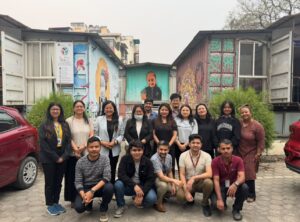
IH KTM welcomed and oriented the 10 selected enterprises as the RoC Incubatees for the RoC Incubator Program – Bagmati Cohort 2 on April 9, 2025, setting the stage for the program’s journey. This session outlined the program’s structure, goals, curriculum, Circular Economy Toolkit in context of Nepal, commitment from the incubatees, business and financial coaching sessions and upcoming activities.
Understanding Circular Economy and Developing a Circular Mindset
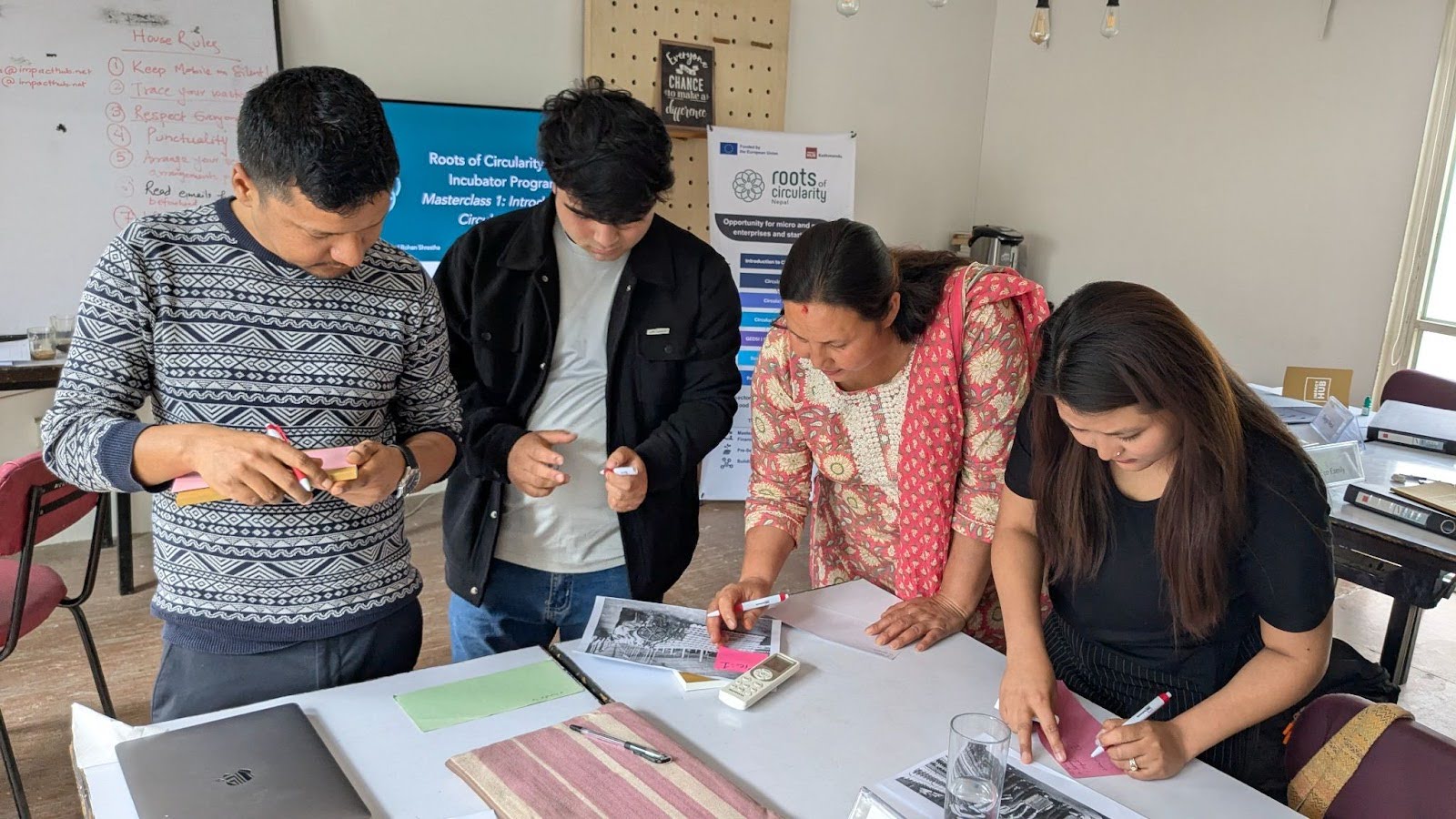
Following the orientation, the first masterclass on “Introduction to Circular Economy” explored the shift from the Industrial Revolution’s linear systems to circular thinking, introducing concepts like regenerative practices and the butterfly diagram. Participants showed great enthusiasm and shared valuable insights, marking a strong start to the cohort’s learning journey.
We conducted Masterclass 1.1 on Developing a Circular Mindset, taking participants on a deeper dive into circular thinking. This masterclass emphasized the importance of adopting a circular mindset to integrate its approaches into their respective businesses. Through engaging activities and meaningful discussions, entrepreneurs explored regenerative thinking, moving away from linear systems, and discovering new circular models, gaining fresh ideas to think about circular initiatives.
3 Days Human Centered Design Sprint | Circular Design Sprint
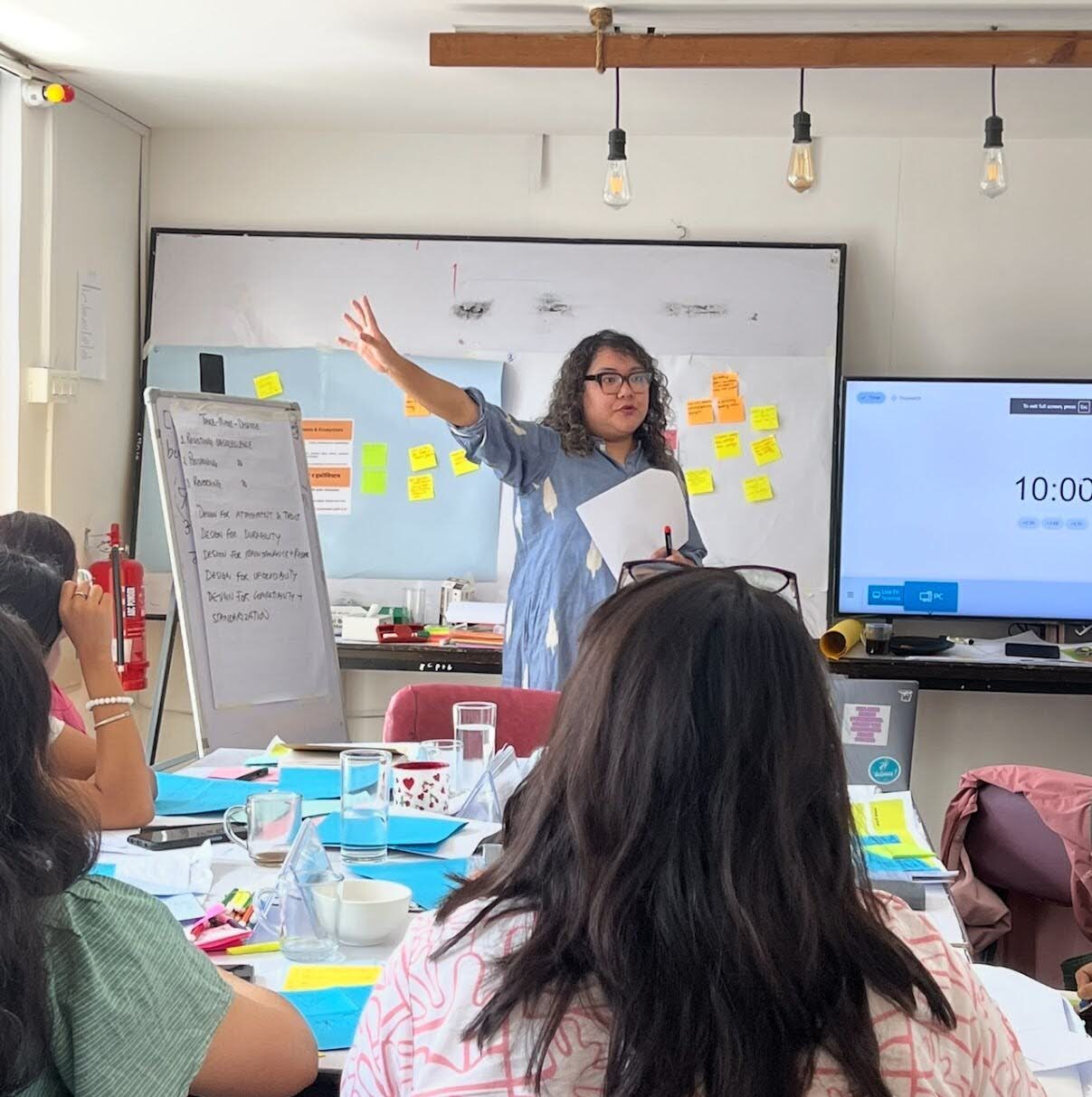
Driven by circular economy principles, we conducted a three-day Circular Design Sprint to foster sustainable innovation. The session was facilitated by circularity experts Samanata Thapa and Ankshita Chaudhary from Startup Discovery School (Asia), the sprint immersed participants in the Human-Centered Design (HCD) process. The goal was to help incubatees explore how their business ideas could contribute to building a circular ecosystem by applying design thinking principles in practical, impactful ways. Throughout the sprint, participants engaged in a series of interactive sessions, from empathy mapping and reframing problems/challenges to ideating circular solutions, mapping impact vs. effort, prototyping, user interviews and finally pitching their circular solutions. The experience empowered enterprises to view circularity challenges through a new lens and create solutions that are not only innovative and user-focused but also environmentally and socially responsible.
With parallel incubation activities underway in both Bagmati and Lumbini Provinces, we have been facilitating masterclasses across both cohorts. Following the updates from Bagmati, here are the highlights from Lumbini Cohort 1.
On January 13, 2025, we held Masterclass 3, 3.1, and 3.2 on Circular Strategy, Stakeholder & Ecosystem Mapping, and Visibility & Branding for the RoC Incubator Program – Lumbini Cohort 1 at the IHK Lumbini Incubator Space, BUCCI. Using circular strategy cards, incubatees explored user needs and developed ideas for impactful, sustainable solutions. They also mapped out key stakeholders and system boundaries to better understand their business ecosystem. The session included peer learning, with Bagmati Cohort 1 incubatees, Dr. Manu Karki from Eco Sathi Nepal, and Himanshu Shrestha from Rekriti sharing useful tips on branding and visibility for startups per their experience.
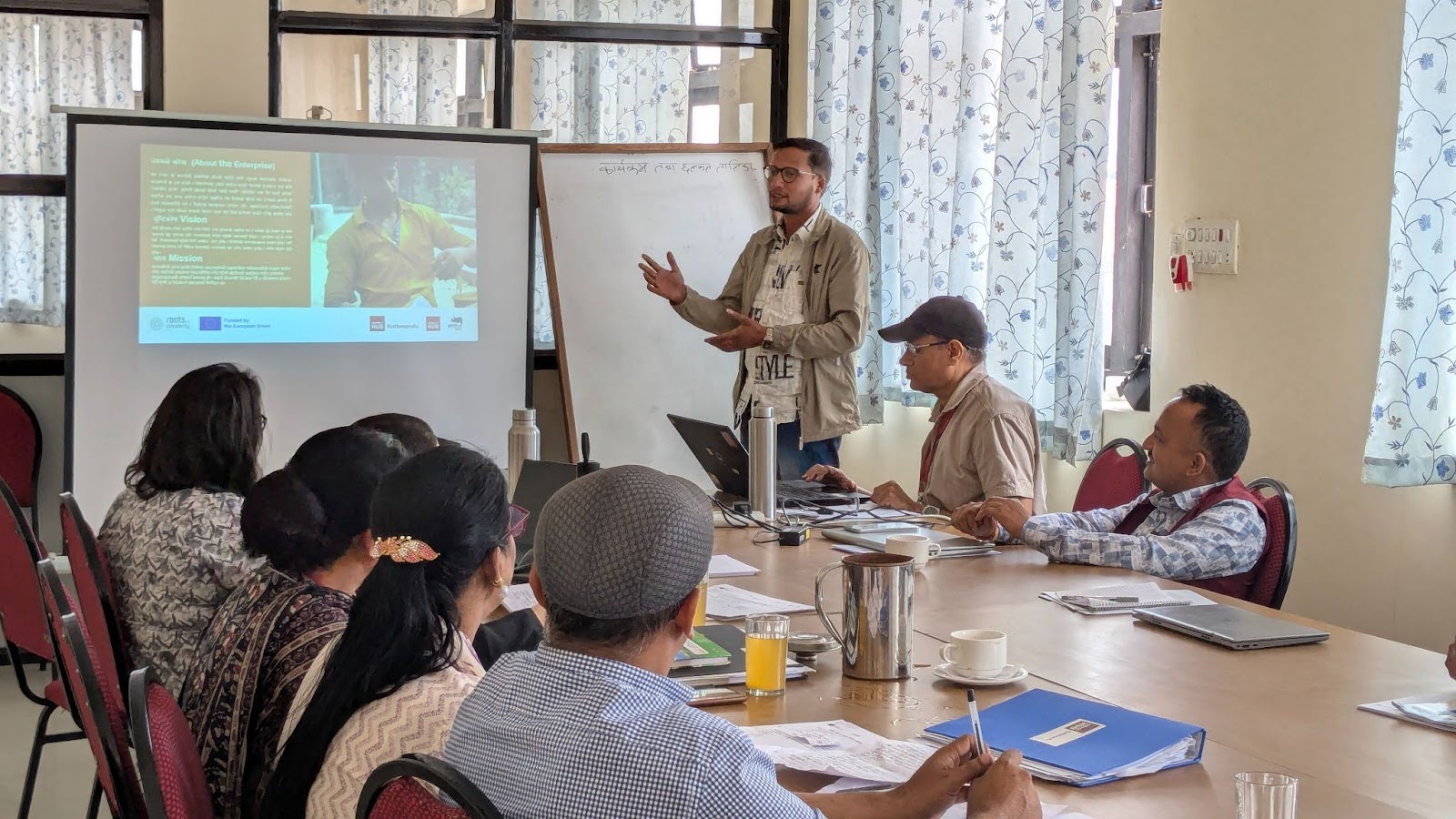
Masterclass 4.1 and 4.2 focused on Environmental Practices and GEDSI. This session on Environmental Practices, led by Sanjeevani Yonzon Shrestha, Director of Wildlife Conservation Nepal (WCN) , engaged the incubatees on various ongoing environmental practices such as climate action, greenwashing prevention, and integrating circualr practices into business models. In the second half, Bisheshta Shrestha, Programs & GEDSI Lead | IH KTM, facilitated an engaging workshop on Gender Equality, Disability, and Social Inclusion (GEDSI), highlighting inclusive approaches, gender equity, and strategies for creating safer, more equitable workspaces within the circular businesses.
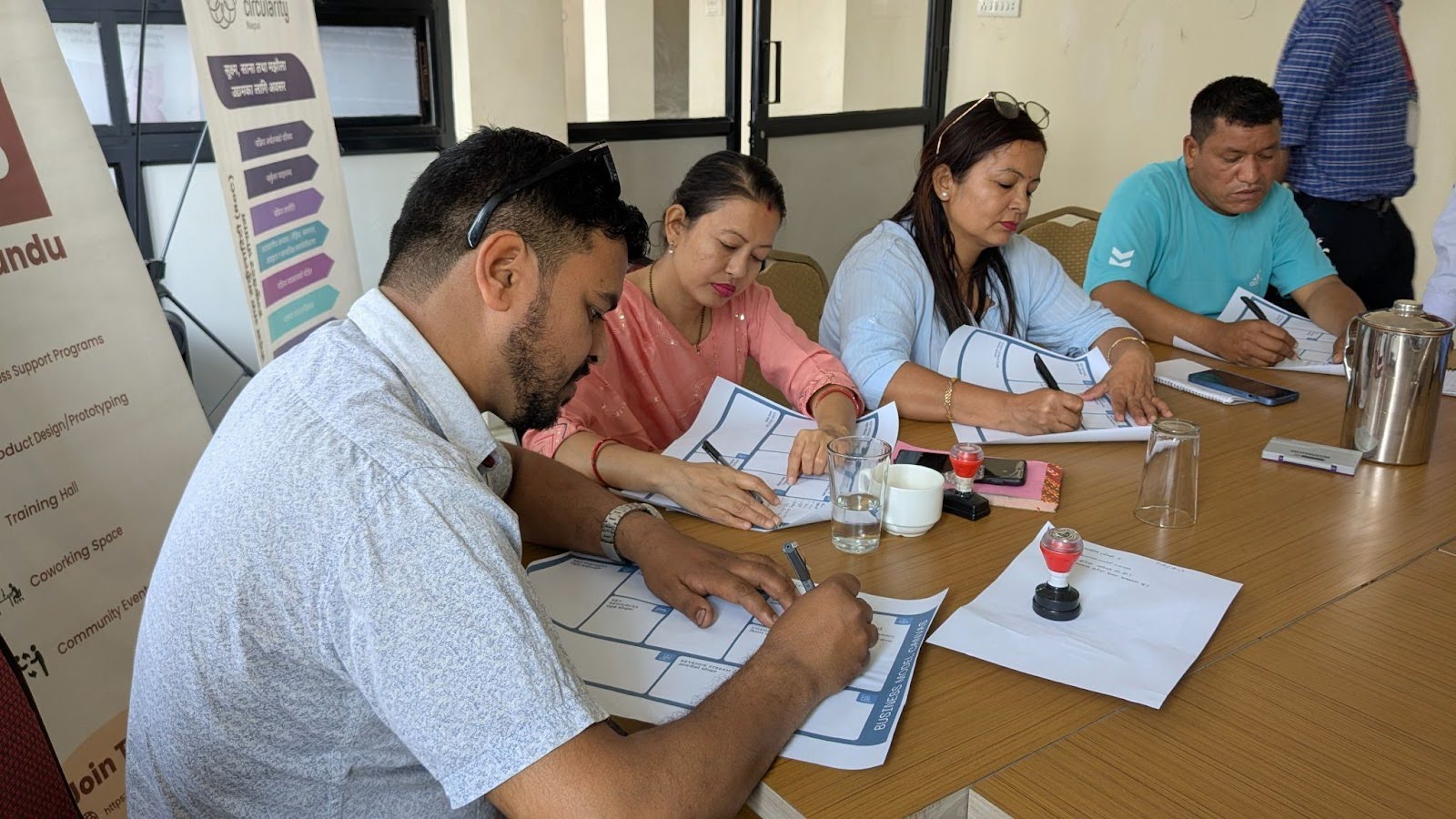
An engaging Masterclass 5 on the Circular Business Model Canvas (CBMC) was held for the incubatees, designed to help incubatees reimagine their business models through the lens of circularity. Facilitated by Rohan Shrestha, Program Officer, the session introduced the nine building blocks of the traditional Business Model Canvas and guided participants on how to adapt each component, such as value propositions, customer segments, revenue streams, and key partnerships, to align with circular economy principles. Through hands-on activities and real-time feedback, incubatees mapped out their current models and explored innovative strategies for reducing waste, extending product life cycles, and creating regenerative value.
Followed by the CBMC session, the next masterclass was on Circular Business Plan, focusing on guiding incubatees transform their circular business ideas into detailed, actionable plans. Participants had the opportunity to clearly define and present their business vision, mission, value propositions, and circular strategies, building on insights gathered throughout the program.
During the session, incubatees worked individually to refine their problem statements, develop sustainable circular solutions, and map out their value networks. Emphasizing the integration of circular economy principles, the masterclass equipped participants with strategic frameworks and practical tools necessary to build resilient and impactful businesses ready for implementation.
With all the recent updates and highlights from the RoC Incubator Program across both provinces, we are proud to share that Lumbini Cohort 1 is nearing completion, with just one final masterclass remaining. Meanwhile, Bagmati Cohort 2 has officially kicked off, and we’re excited to witness the growth and journey of the new entrepreneurs focused on circularity in action.
If you’re an entrepreneur based in Lumbini Province and eager to grow your business through circular economy principles, stay tuned for our next Call for Applications for Lumbini Cohort 2!