
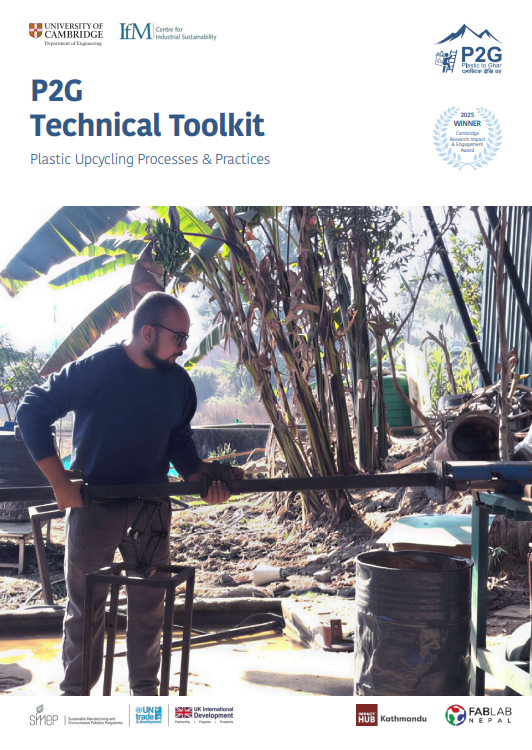
Technical Toolkit
This toolkit offers comprehensive guidelines for appropriate technologies focused on distributed plastic waste upcycling, developed through the P2G project between 2022 and 2026. Its primary objective is to serve as a complete reference for the entire plastic upcycling process, ensuring that facilities and operators have access to reliable, context-sensitive technical guidance. The toolkit covers every stage of the process, from raw material preparation and machine selection to procurement, installation, and day-to-day operational practices. It is specifically tailored to the Nepali context, considering the challenges posed by limited infrastructure, remote locations, and a rugged natural environment that demands adaptable and resilient solutions. Beyond just technical specifications of the machines, it incorporates hands-on tips and practical insights on machine operation gathered from four years of field experience, making it a living document grounded in real-world application.
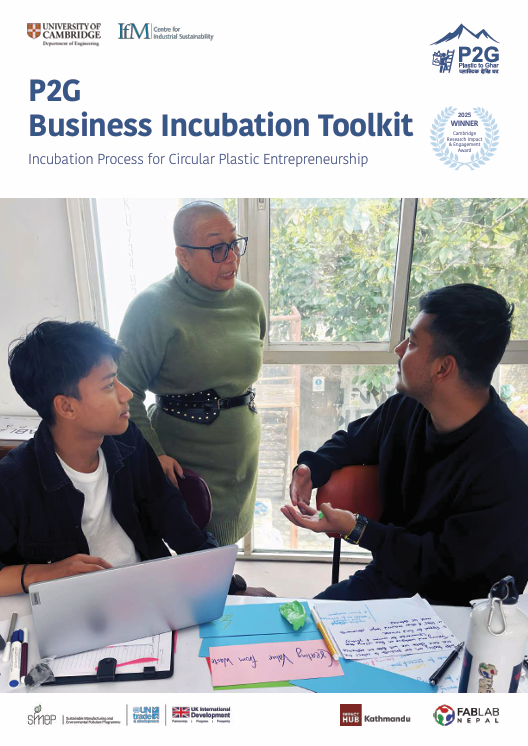
Business Incubation Toolkit
The Business Incubation Toolkit offers a comprehensive guide to designing and delivering structured, impact-driven incubation programmes for plastic upcycling enterprises, developed through the collaboration between the University of Cambridge and Impact Hub Kathmandu (2022–2026). It is tailored to support organisations and incubators working with purpose-driven entrepreneurs in Nepal, addressing critical barriers such as access to finance, technical capacity, raw material sourcing, and market readiness. The toolkit walks through the full incubation journey across three phases : ideation, incubation, and pre-acceleration, utilising MAKEathons, masterclasses, one-on-one coaching sessions, and pre-seed funding to strengthen business resilience. Rooted in sustainability principles, it encourages entrepreneurs to embed social, environmental, and economic impact into their business models, going beyond profit to foster circular economy thinking.
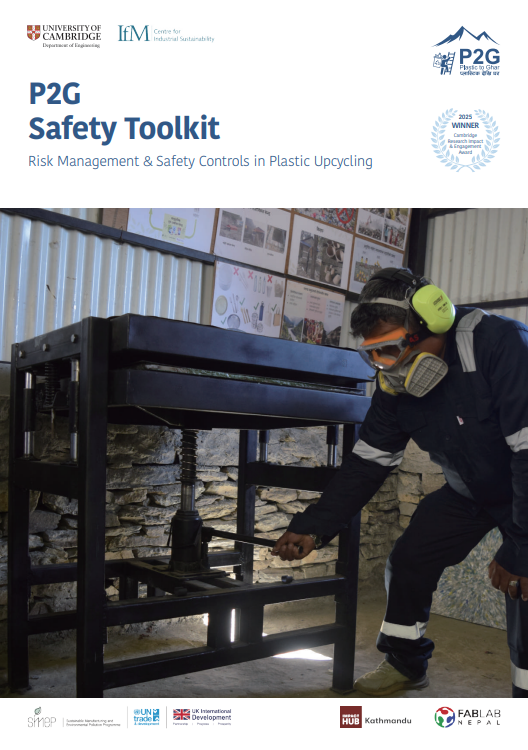
Safety Toolkit
This toolkit provides comprehensive safety guidelines for plastic recycling facilities, developed through the P2G project. It addresses the various hazards associated with plastic reprocessing machines, with particular focus on harmful fumes generated during the melting process, which is a critical stage in mechanical plastic recycling. The toolkit identifies key safety hotspots across the recycling workflow and shares practical, hands-on knowledge accumulated over four years of real-world operations. Rooted in Occupational Health and Safety (OHS) principles, it emphasizes that effective safety measures not only protect workers, equipment, and the environment but also contribute to overall business performance. By proactively reducing accident risks, facilities can lower operational costs, avoid legal liabilities, and strengthen competitiveness, especially when safety standards influence supplier selection. The toolkit ultimately aims to foster a culture of responsible and sustainable recycling, ensuring regulatory compliance while improving facility efficiency and productivity.
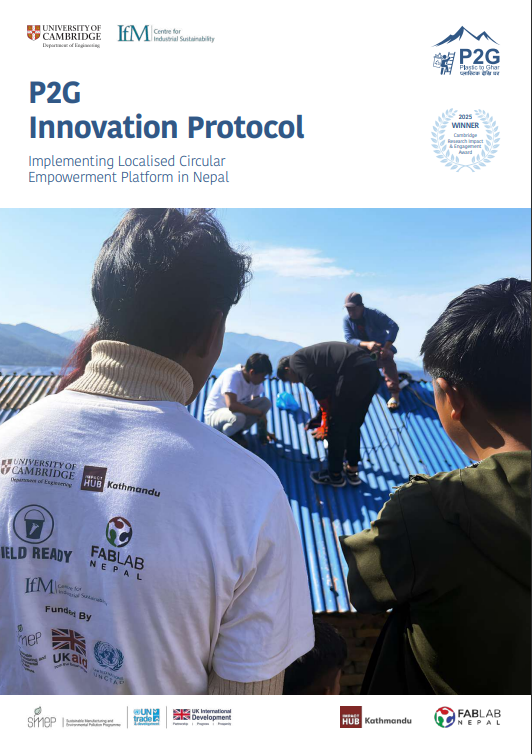
Innovation Protocol
The P2G (Plastic 2 Ghar) Innovation Protocol outlines a collaborative initiative in Nepal designed to establish localised circular economy ecosystems that transform plastic waste into valuable housing products. P2G is a research / impact creation project consortium led by Centre for Industrial Sustainability, Institute for Manufacturing, Department of Engineering, University of Cambridge in collaboration with Impact Hub Kathmandu and FabLab Nepal since 2022. The project focuses on empowering local entrepreneurs through a decentralised, small-scale manufacturing model. As of March 2026, these efforts have resulted in five active rural and urban hubs, the creation of over 100 local jobs, and the diversion of just over 5 tonnes of plastic waste from the environment. The protocol proposes this “Localised Circular Empowerment Platform” as a replicable model for other landlocked developing countries and resource-constrained contexts worldwide.
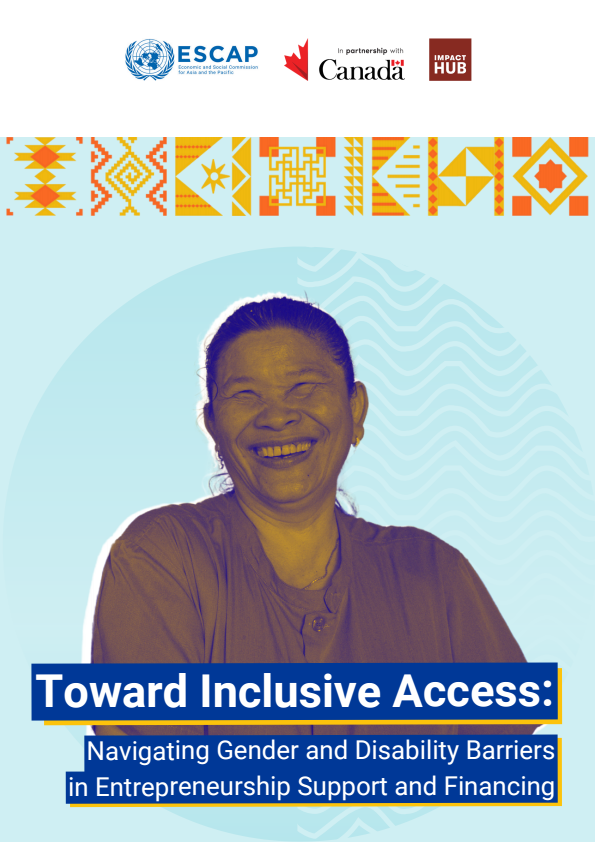
Toward Inclusive Access : Navigating Gender and Disability in Entrepreneurship Support and Financing
This study aims to uncover and address the intersectional challenges faced by women entrepreneurs with disabilities in accessing business support and financial services in low- and middle-income countries in Asia, particularly Bangladesh, Cambodia, and Nepal. The experiences of entrepreneurs in our study highlight that women entrepreneurs with disabilities face societal, institutional, and infrastructural barriers that significantly hinder their business endeavours and access to support services, including financial capital, underscoring the urgent need for more inclusive services, programmes, and comprehensive policies.Members of the core research and drafting team included Rashi Maharjan, Research and Programs Officer and Padmakshi Rana, Executive Director, from Impact Hub Kathmandu.
Circular Economy Toolkit
The Circular Economy Toolkit is a comprehensive resource designed to advance circular practices in Nepal, helping organizations, entrepreneurs, and communities adopt sustainable solutions. After rigorous research and development led by our Program and GEDSI Lead, Bisheshta Shrestha, with strong support from our Programs Officer, Rohan Shrestha, from December 2023 to July 2025, we are proud to publish this full toolkit in the Nepali language.
This milestone reflects our ongoing commitment to foster innovation, inclusivity, and resilience through circular economy approaches.
Scoping Study - Circular Economy in Bagmati and Lumbini Provinces
The Roots of Circularity (RoC) study is a preliminary assessment conducted to explore the concept and implementation of the circular economy (CE) within the Bagmati and Lumbini Provinces. This systematic approach aims to map out existing knowledge, identify gaps, and refine research questions and methodologies for future in-depth studies. Unlike studies that assess the quality of evidence or draw firm conclusions, this scoping study provides a broad overview of the current landscape of CE.