The UNDP Green Job Creation through Recycling and Upcycling (GCRU) Project in Pokhara Metropolitan City (PMC) is leading the charge toward a green and circular economy through sustainable waste management and enterprise development. Funded by Korea International Cooperation Agency (KOICA), the program addresses Pokhara’s growing waste challenge, as the city generates approximately 182 metric tons of waste per day, highlighting the need for sustainable waste solutions.
As the capital of Gandaki Province and one of Nepal’s fastest-growing urban centers, Pokhara faces increasing pressure on its waste management infrastructure due to rapid urbanization, migration, tourism, and commercial expansion. In response, the GCRU project is helping transform the city’s waste management system from a linear “throw-away” model into a circular economy approach, reducing pollution, enhancing resource recovery, and generating sustainable green jobs through the establishment and growth of recycling and upcycling (RU) enterprises.
Three Pillars of the Project
The program focuses on:
- Policy and Coordination: Strengthening governance and incentivizing RU businesses.
- Enterprise Development: Supporting entrepreneurs through incubation, mentorship, and financial guidance.
- Community Empowerment: Raising awareness and encouraging participation in waste segregation and material recovery.
From Application to Orientation: Setting the Stage
Building on its 2024 success; where four enterprises were supported through an incentive mechanism; the GCRU project is implementing a structured six-month business incubation program in 2025, designed and facilitated by Impact Hub Kathmandu.
Preparation for the RU Business Incubation and Startup Support Mobilisation Program began in June with registration forms in English and Nepali, eligibility criteria, and a comprehensive outreach plan.
The call for applications was officially launched on July 1 via social media and newsletters. Targeted outreach followed, engaging applicants through emails and phone calls followed by a virtual briefing about the program objectives, selection processes, and participant commitments. By late July, 33 applications were reviewed, 23 applicants were shortlisted for interviews, and the final 20 participants were confirmed in early August.
Orientation, Masterclasses & One-on-One Coaching
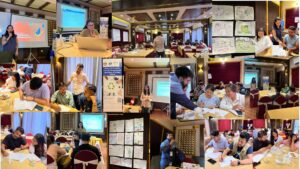
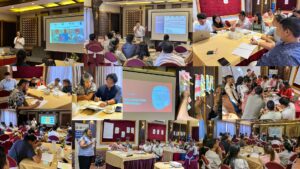
The incubation program officially kicked off on August 21 with an orientation session led by Impact Hub Kathmandu in presence of UNDP GCRU teams. Human-Centered Design (HCD) Sprints guided participants in uncovering insights, framing challenges, and defining problem statements. These sprints continued across multiple sessions, fostering ideation, solution development, and prototype creation.
Participants strengthened their core business skills through the masterclasses. In the Branding and Visibility session, participants crafted strong brand identities and actionable visibility plans. Financial Management sessions enhanced budgeting, financial planning, and strategic resilience. Marketing Strategy workshops helped entrepreneurs develop marketing campaigns and expand networking opportunities within the RU sector. In addition, Business Roadmap planning sessions guided them in outlining growth strategies, operational plans, and milestones for scaling their enterprises.
Participants also engaged in intensive one-on-one coaching sessions with business, finance, and technical experts, focusing on business model refinement, investment readiness, and technical processes development for their enterprises.
Implementation & Progress
Implemented in coordination with Pokhara Metropolitan City, and under the supervision of the UNDP GCRU Team, the program combines coaching, technical guidance, and equipment support to empower the next generation of impact driven entrepreneurs.
The incubation program culminated in a Demo Day and investor pitching session, where participants will showcase their innovations to a panel of jurors and industry guests.
Stay tuned for our next article on Demo Day, held on 15 October, 2025 and witness how RU entrepreneurs and enterprises are turning waste into opportunity, building a cleaner city, and creating sustainable livelihoods.