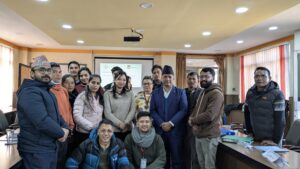
I had applied to a different position at Impact Hub Kathmandu, but after reviewing my CV, Padmakshi Rana ji, the Executive Director, invited me for a conversation that ultimately led to a new role as Program and GEDSI Lead. In my first week, she told me, “Roots of Circularity is your baby now,” and walked me through the project deliverables. The Roots of Circularity program required us to incubate 60 entrepreneurs in the circular economy, a completely new field for me. Despite initial nerves and self-doubt about reaching so many entrepreneurs, I embraced the responsibility and began immersing myself in the world of entrepreneurship and circular economy.
One fine mundane day, I received an email from Zain, Curator of Moving the Needle, British Council stating that he would want me to represent Roots of Circularity in Pakistan, Lahore. For a moment I paused, I thought this was too good to be true. I sat on a call with Zain and we discussed what all I can bring to the program itself, then he said he will reach out to me within a week. I did not have much hope, but just the thought of traveling to Pakistan was giving me mixed feelings (happy anxiety). Then I received an email stating that I have been selected to represent Nepal’s circular economy ecosystem in the Moving the Needle program organized by the British Council. I still remember, my knees got weak and my eyes were filled with tears.
 So then I embarked upon this journey on September 18th 2025. I was anxious as I was also fed with so many questions before heading to the airport, “Why are you going to Pakistan?”, “Think about it again, once you have the stamp on your passport it will be difficult for you?” “There is war going on, are you sure?” and many more questions. Nevertheless, I boarded the flight and set off to represent Nepal and the Roots of Circularity project.
As soon as I landed in Pakistan and crossed immigration, an airport officer asked, “After how many days are you coming back to Lahore?”, a question that surprised me until he checked my passport and realized I wasn’t from Pakistan. Only later, in the car with Tafseer ji from the British Council, did it hit me that he had likely assumed I was a local woman traveling alone. It reminded me how often, in every Asian country I visit, people assume I’m from there. After checking into the beautifully curated Nishaat Hotel, which felt perfectly aligned with the artistic spirit of the Moving the Needle program. Every delegate was already sharing updates about the next day in the WhatsApp group, and the team’s organized approach, making sure everyone had arrived and checked-in, set a positive tone for the days ahead.
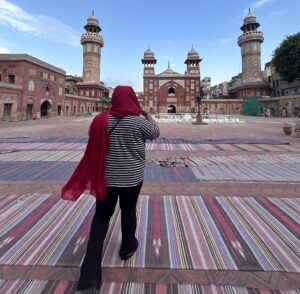
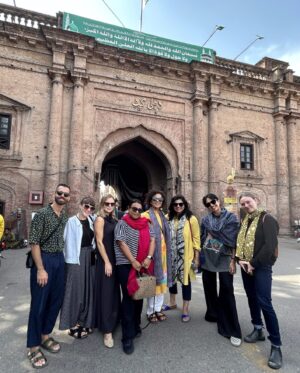 The next day, I skipped the factory visit to recover from my flight but joined the team tour to Lahore Fort in the old city. Before entering, we were briefed that Pakistan doesn’t receive many tourists, so locals might approach us out of excitement and they did. People were warm, curious, and incredibly hospitable, eager to know who we were and where we came from. As I walked through the old city, I was struck by how seriously the local government and institutions took heritage preservation; it felt like witnessing what true development should look like, growth that protects history, uplifts communities, and honors identity. The public bath showcased remarkable Mughal-era innovation, and two things stayed with me: first, how mass media often misrepresents Pakistan, overshadowing its beauty, safety, and warmth; and second, the profound calm I felt inside Masjid Wazir Khan, where all my exhaustion and anxiety seemed to melt away. We ended the tour with a beautifully decorated ride that felt like a wedding carriage, laughing together as we soaked in what Pakistan truly stands for.
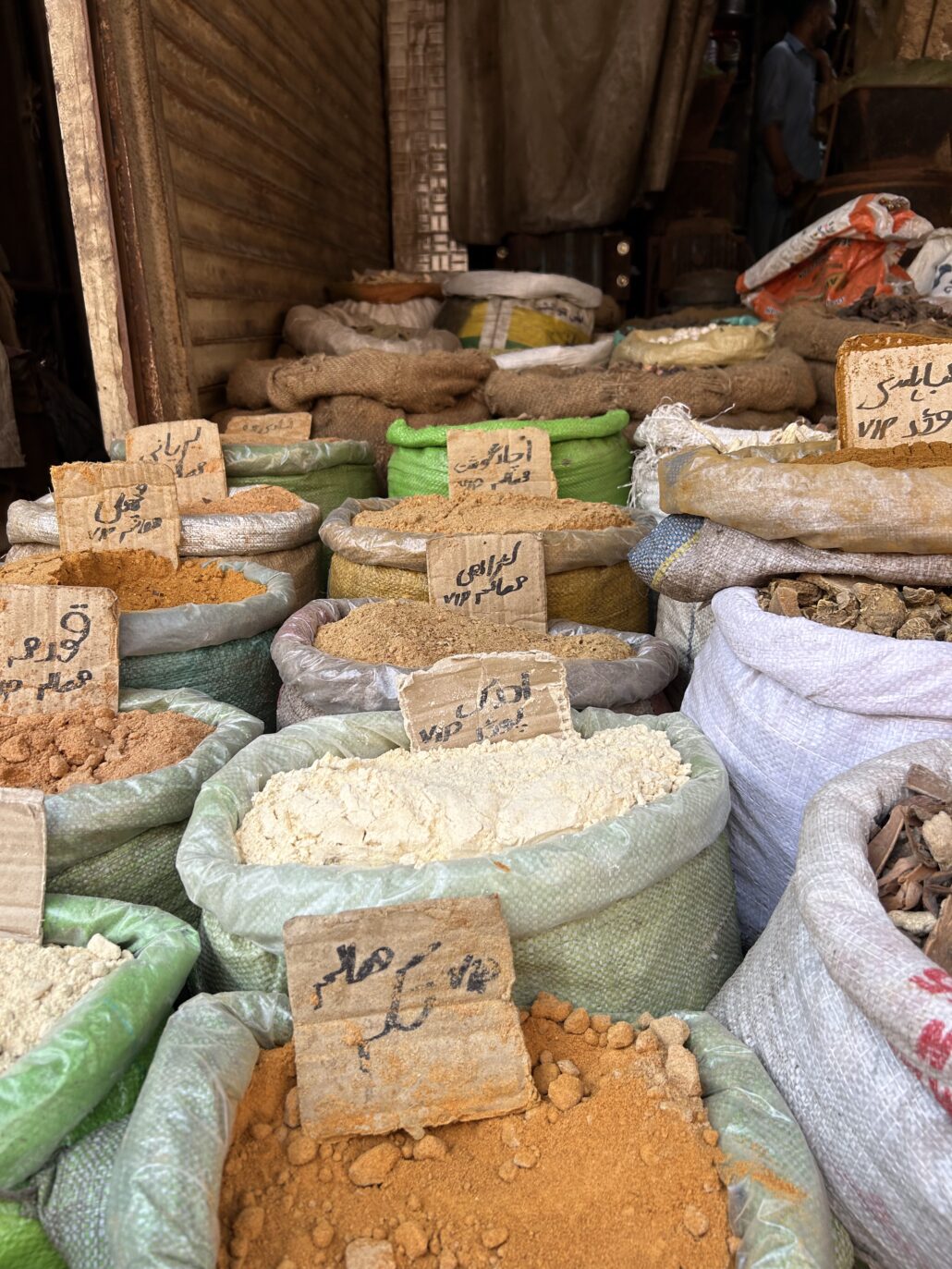
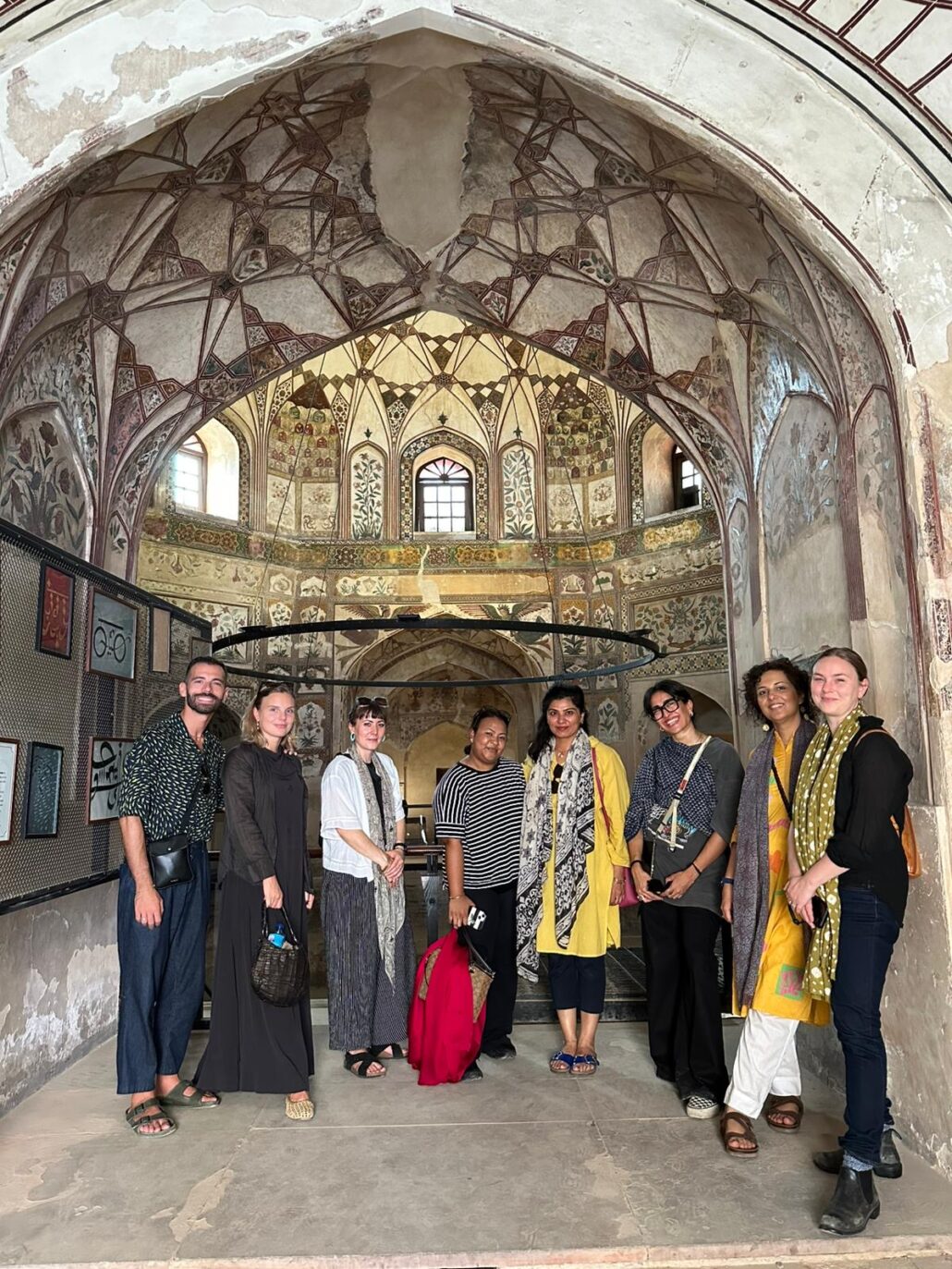
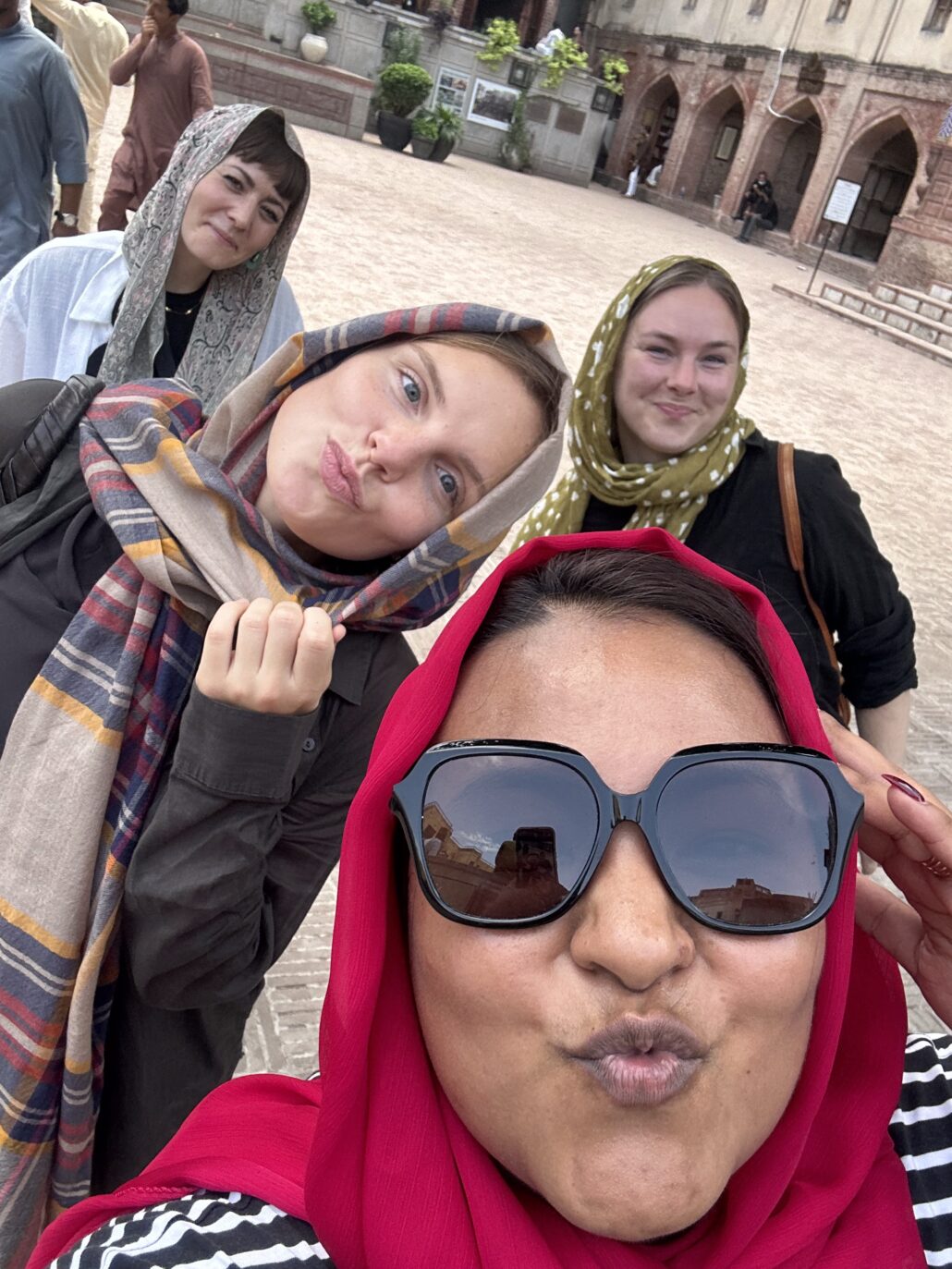
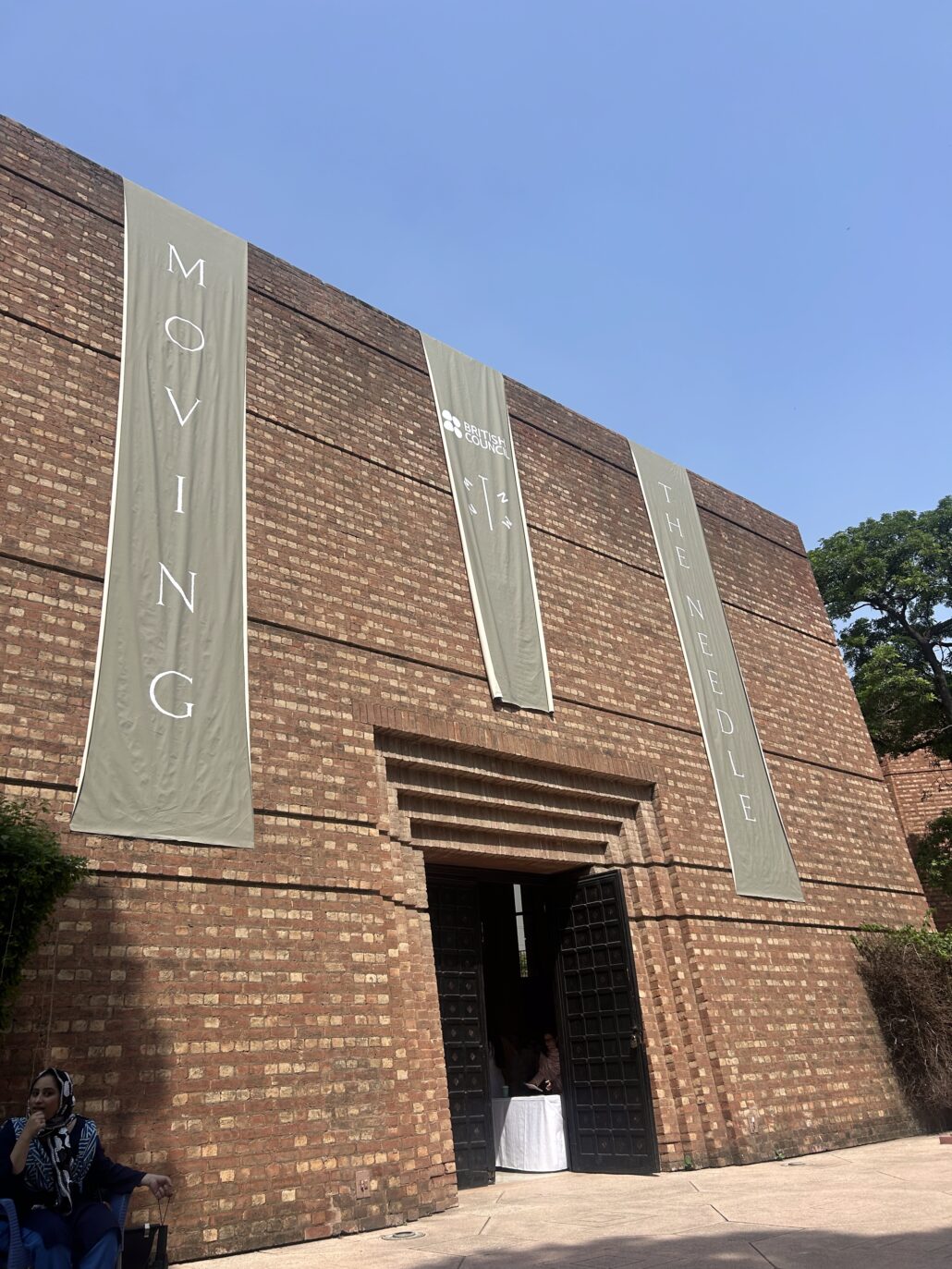
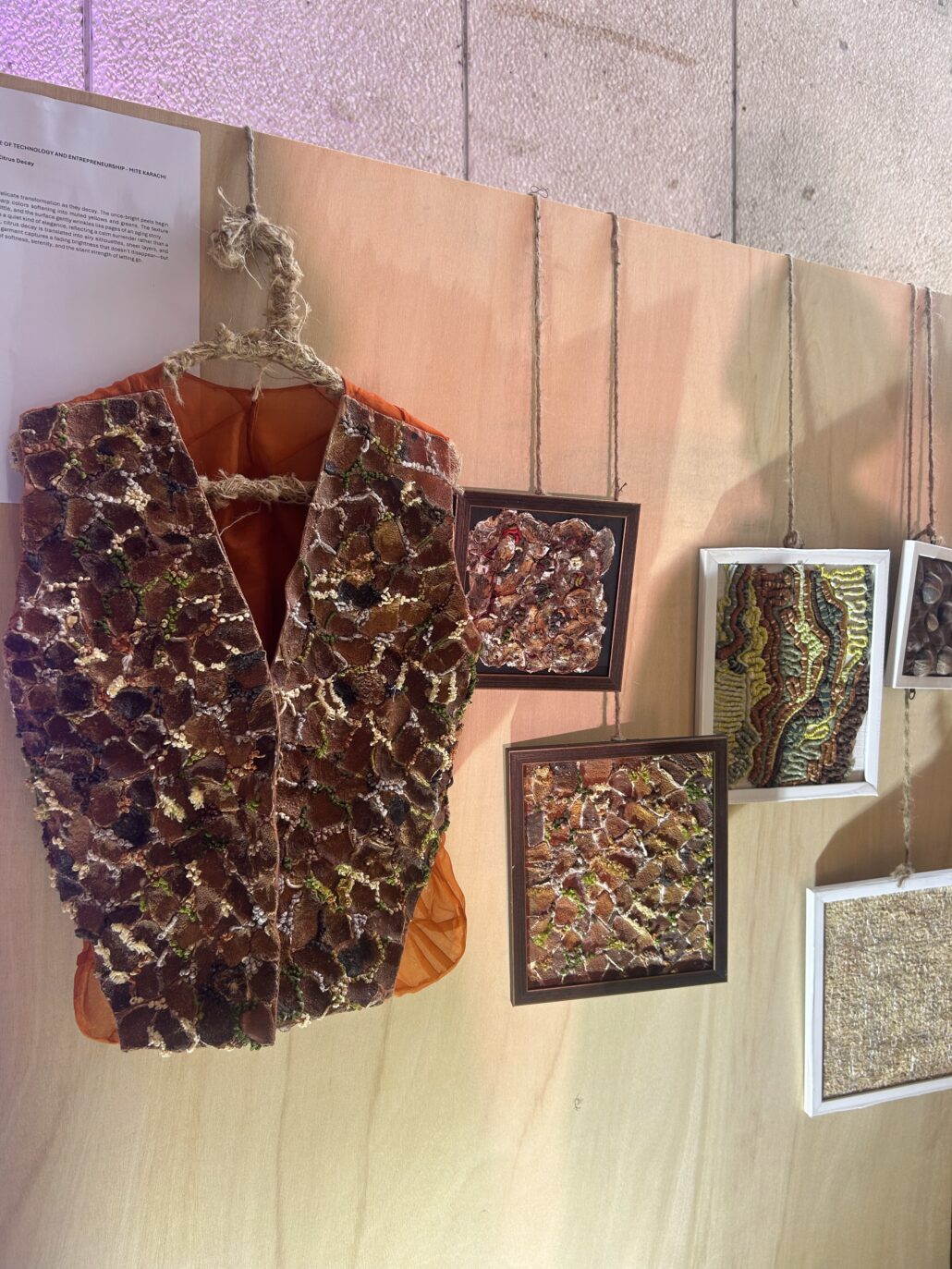
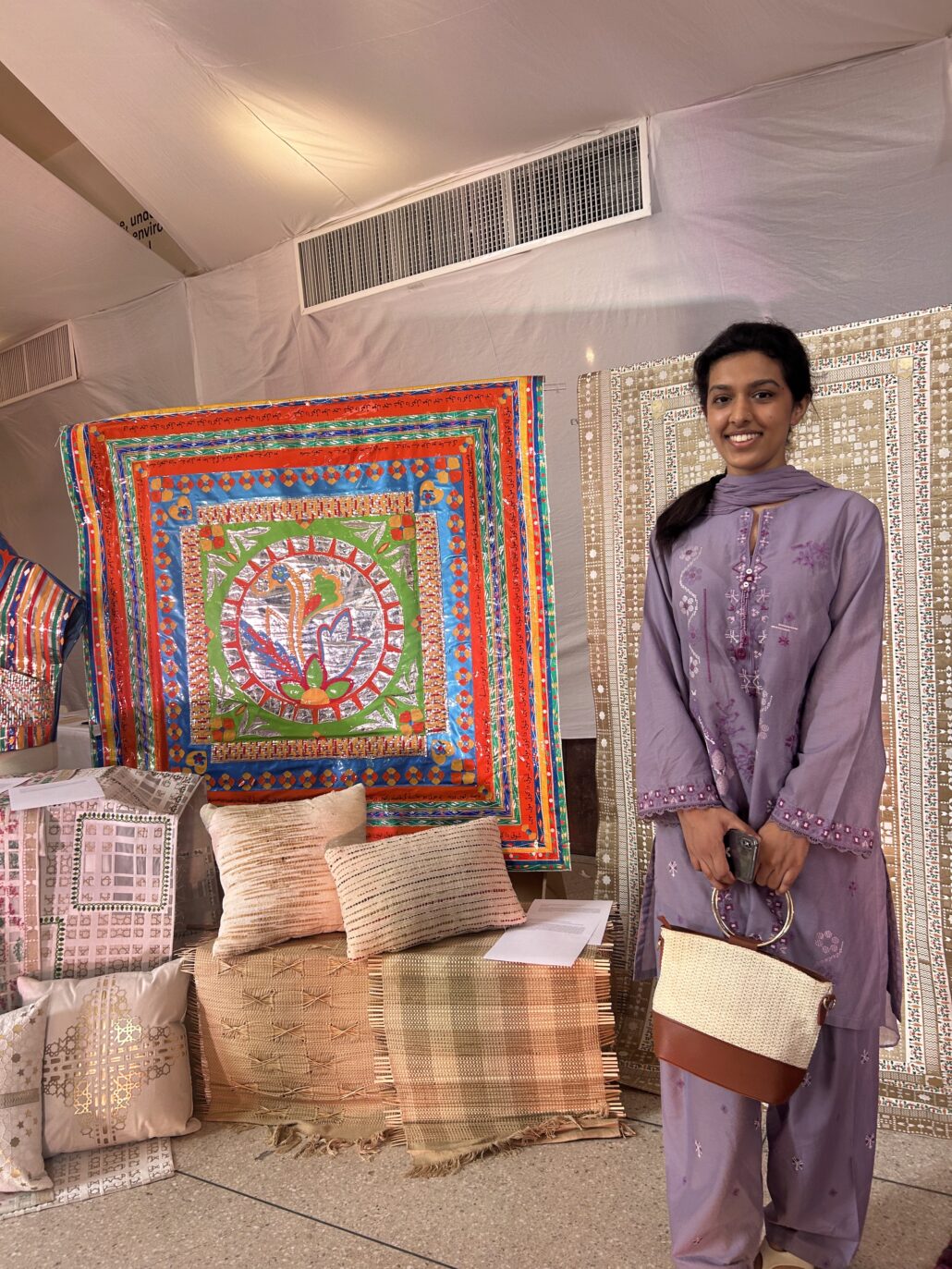
Day one of the Moving the Needle Symposium began with excitement as we entered the Alhamra Arts Council, a space that made me think of how much Nepal needs accessible, creative venues like this. The council was beautifully branded with symposium banners, offered all-day tea and coffee, and had dedicated areas for networking, resting, and sharing wholesome meals together. Inside the main auditorium, we were welcomed by 14 college students showcasing sustainable and circular fashion projects that wove together recycled materials, vegan fabrics, chemical-free dyes, and elements of Pakistan’s culture and heritage. Their work placed circular economy at the heart of the symposium, proving how powerfully young people can innovate when given space and opportunity. As a circular economy practitioner, their creativity deeply inspired me to bring similar voices and possibilities to Nepal.
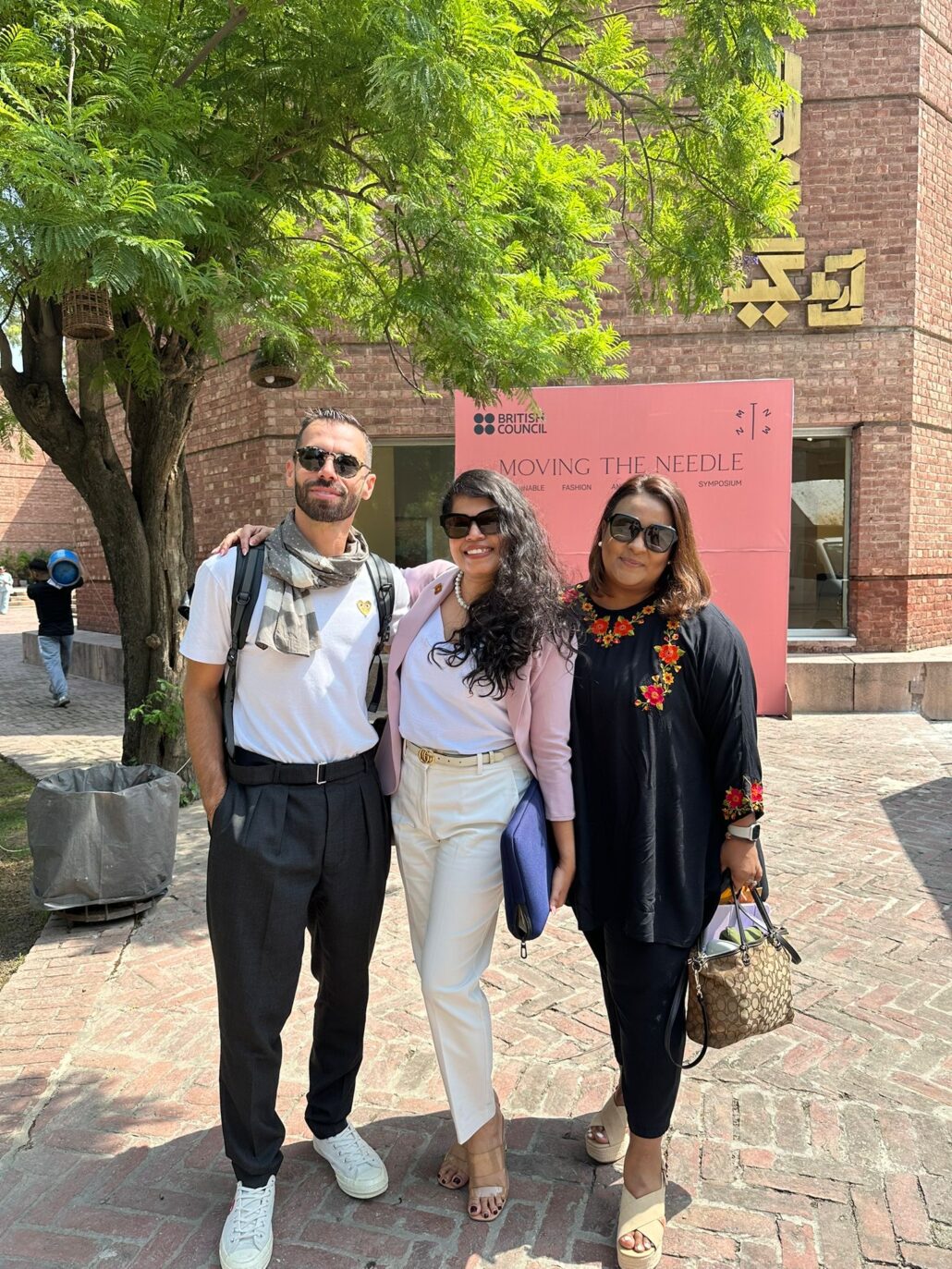
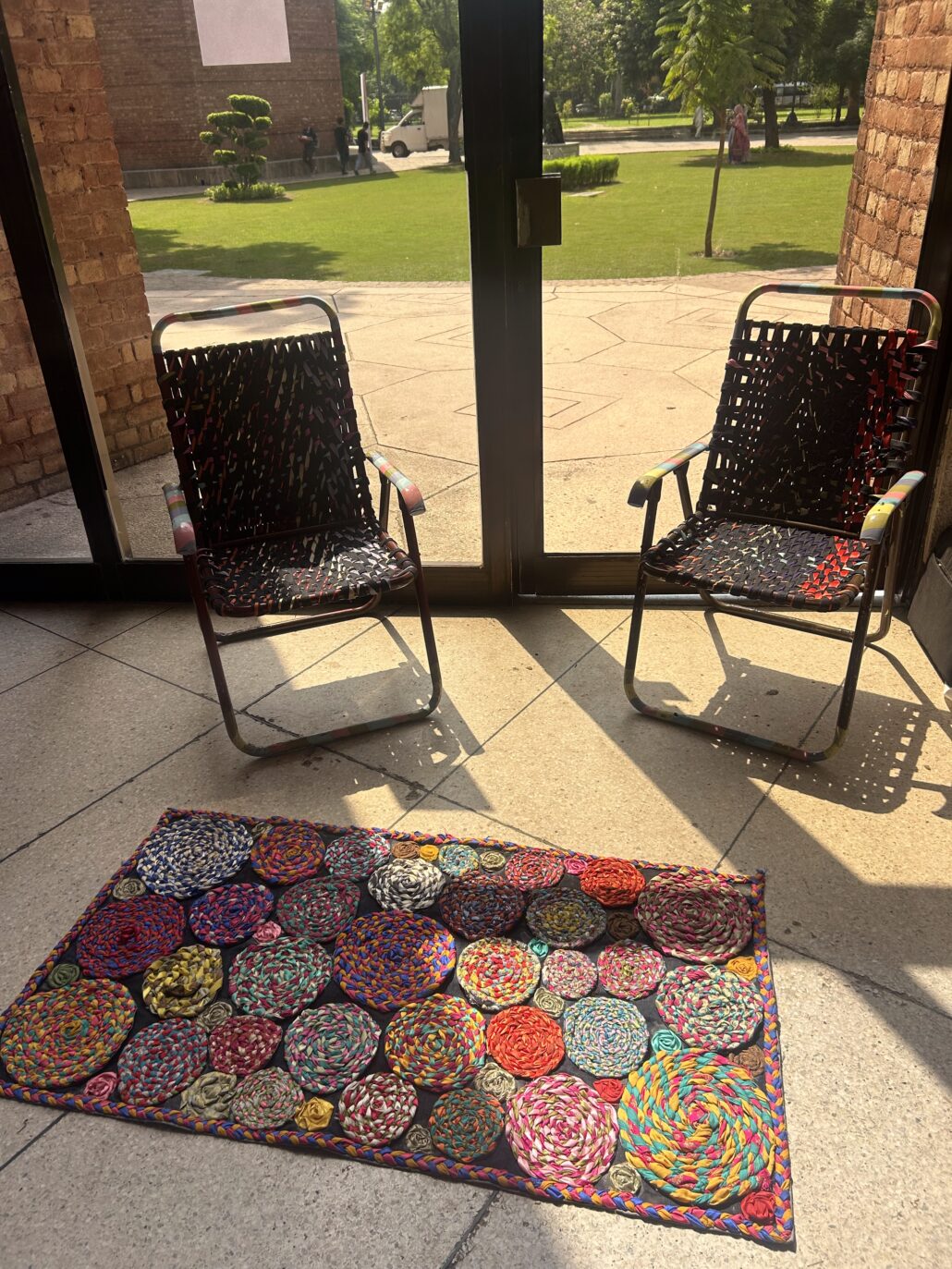
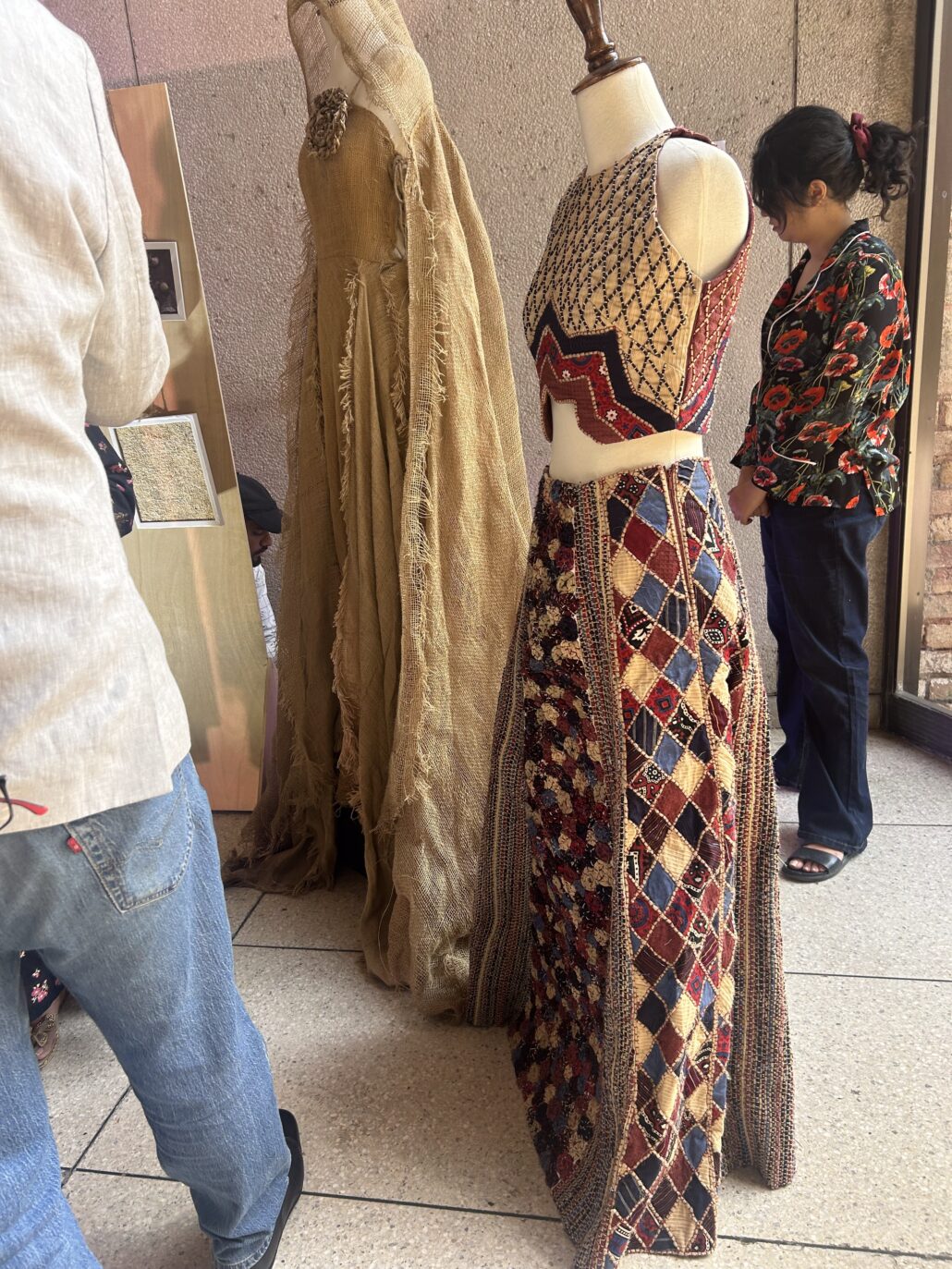
Then the opening remark was by the brain behind Moving the Needles, Zain Ali. He shared a piece of his personal journey with an auditorium full of people, how he was influenced to get into fashion and what motivated him to design Moving the Needle symposium. His warm words really resonated with me as it reminded me of the kind words of Padmakshi ji, who took me in when I was lost. She gave me the space to grow and bear the circular economy flag.
The sessions then commenced, starting with “Resilient Design: Bridging Climate, Heritage and Innovation” where prominent figures as such as Kamil Khan Mumtaz, Architect and Ali Hassan Habib, Sama Verte where one of the key point Kamil ji stated was:
“Global Warming was used before more than climate change, now it is vice versa because global warming had a negative connotation attached to it. Likewise, by replacing global warming with climate change it is misleading the community by taking out the main problem that is climate change is caused due to global warming.”
– Kamil Khan Mumtaz
I was taken aback by the statement and it made me realize the political attribute a language has, the power it holds to make or break the country in a long run. When I was reflecting on the same statement, I was thinking about the word circular economy and if we have done justifiable work. While pondering on it I came to the conclusion that the Roots of Circularity team has taken all the measures and has implemented in a manner that the grass root level enterprises and businesses can contextualize it. We have given the power to the community to show us what circular economy mean in Nepal and that is how it should be.
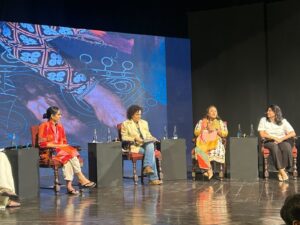
Then moving forward the working sessions were open where parallely various workshops and sessions were being conducted in different avenues of the art center. Then the closing dialogue was ours “ Unlocking Innovation: Insights from Pakistan, South Asia and UK” , I shared the panel with Hasnan Lilani, Datini Fibres (Pakistan), Leonie Vaas, Hirdaramani Group (Srilanka), Rachel Singer, Re- London (UK), Bisheshta Shrestha, Impact Hub Kathmandu (Nepal) and the session was moderated by Lauren Junestrand, UK Fashion and Textile Association (UK). During the session we all discussed how in each of our countries circular economy was being practiced and I was given the opportunity to speak about the Roots of Circularity project. I shared that when people think of innovation they automatically think you need to be from engineering background or atleast have a knowledge of it but in case of Nepal what we have noticed is that innovation needs to start with the way people perceive things, how they perceive their business, how they think innovatively to integrate circular economy within their businesses once that is achieved to make innovation part of their business was very easy.
Also I shared how few of the enterprises that we have worked with got the space to revive and reestablish themselves within Nepal’s entrepreneurial ecosystem. One of the case studies which I shared was that of Hatti Hatti Nepal. When Hatti Hatti Nepal joined our Roots of Circularity incubator program they had said to us “even if this does not work, we aim to shut the organization down” but today they have more than 6 people working full time with them, how they have gained confidence in their story and the ethos that they started their business with. Sometimes all that is required is an hour of just listening to them, creating that safe space for them where they can share their pain. For a circular economy to exist in Nepal we need to embed empathy and that is what Impact Hub Kathmandu stands for.
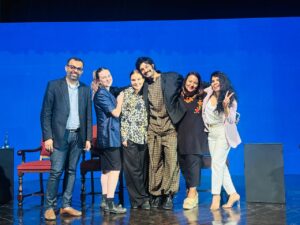
Then the session ended with a dinner in the Hiramandi District overlooking the Lahore Fort. On the second day the session started with our second panel which was “Faultline of Fabric”. I shared the panel with amazing women leaders such as Bushra Ali Khan, Bazyaft, Khadija Rahman, Generation, Nazish Hussain, Secret Stash and Zein Ahmed, Love Handmade. The session was moderated by Amneh Shaikh-Farooqui, Social entrepreneur and also the curator of WOW program in Karachi. In this session we discussed how the textile industry in each of our countries was and what needs to be undone. The panel was filled with so many empowering stories of women, how they started their businesses to empower the women and how their businesses were bringing the art, culture and heritage of Pakistan in an international platform. Everyone shared that by empowering the grassroot community, by bringing forward their skills and knowledge they are not just making a social economic impact but also preserving the arts of the country.
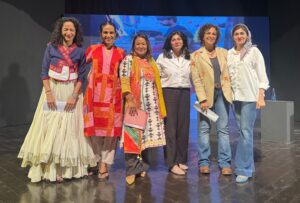
Which stands true for Nepal as well, through Roots of Circularity project we are empowering the grassroot community to bring forward their stories and skills, this is leading to the preservation of skills through entrepreneurship. It reminded me of Anju Sanitary Napkin, Tharu Khastakala, Hatti Hatti Nepal, Eco Sathi Nepal, Deego Nepal, Nhu Designs, Rekriti, Duluwa Outdoors out of many others. These entrepreneurs are not just empowered, they also have empowered the whole community to believe in their skills and heritage. Through the Roots of Circularity project we have been able to showcase that by making space for their stories and their culture, the circular economy within Nepal has always existed. It just had to be told and I am honored to tell these stories and experience in an international platform such as Moving the Needle symposium.