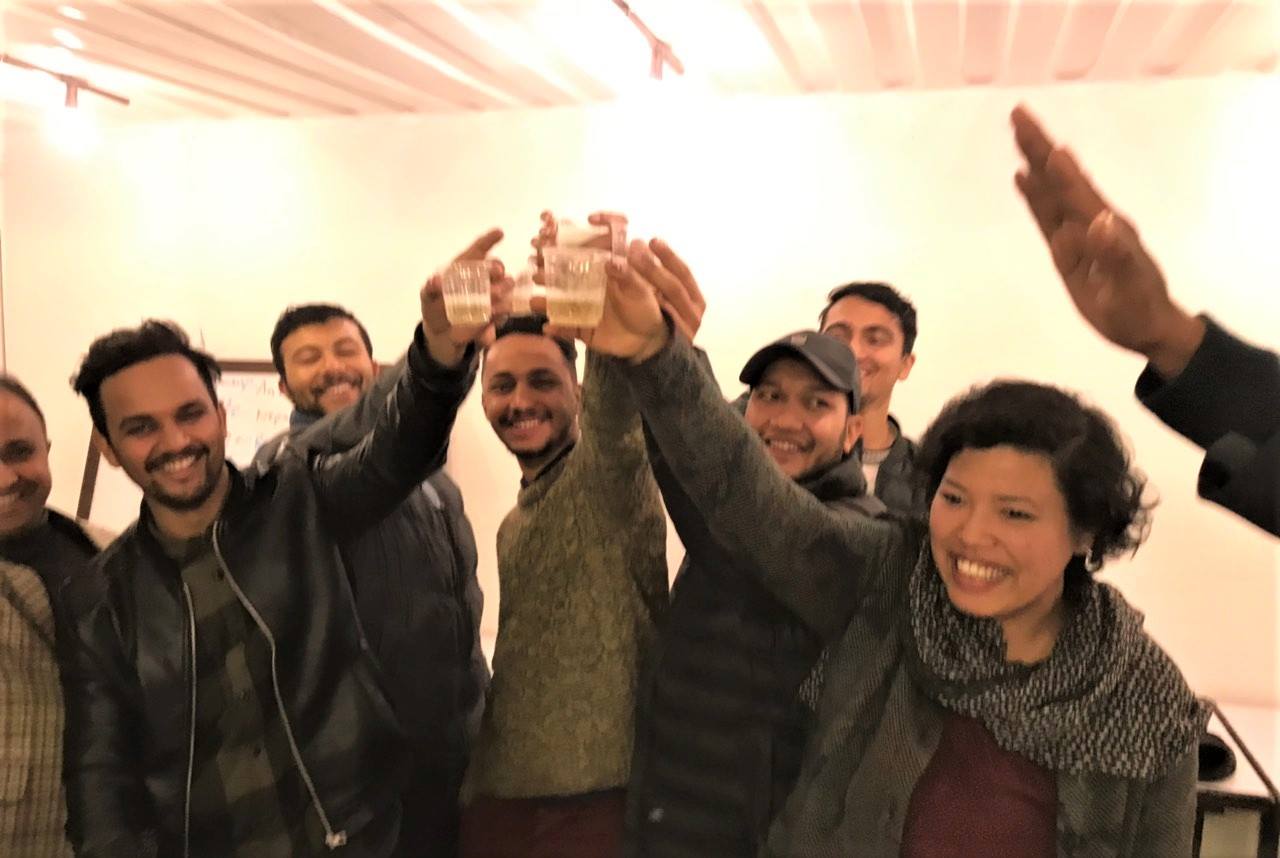
Impact Hub Kathmandu has officially launched the “Incubation of Ideas on Climate Smart Livelihood Solutions,” in collaboration with Plan International Nepal, a forward-looking initiative designed to identify, nurture, and accelerate innovative ideas that enable communities to adapt to climate change while strengthening sustainable livelihoods. At a time when climate vulnerability continues to challenge local economies across Nepal, this incubation offers a structured and supportive pathway for early-stage ideas to evolve into practical, scalable, and climate-resilient solutions.
The program is built around a comprehensive incubation model that combines one-on-one mentorship, technical guidance, business model development, resource support, and access to a vibrant entrepreneurial ecosystem. By bridging the gap between ideas and implementation, the initiative ensures that promising concepts are not left unrealized, but instead transformed into viable enterprises capable of generating both environmental and economic impact.
A defining feature of the incubation is its strong emphasis on inclusion and empowerment. With a dedicated focus on Gen Z youth and women, the program champions a new generation of entrepreneurs who are committed to safeguarding the environment while creating meaningful economic opportunities. It recognizes that young people, particularly those from marginalized backgrounds, possess the creativity, resilience, and local insight necessary to lead climate-smart innovation when provided with the right platform and support.
Why Bardiya? A Region of Potential
Bardiya, one of Nepal’s promising agricultural hubs, has been selected as the implementation site for this initiative. Known for its strong potential in farming and green enterprises, the district holds immense opportunity for sustainable economic growth rooted in climate-smart practices. Despite its abundant natural resources and a city population of approximately 62,137 (2023), many young people in Bardiya migrate in search of better opportunities due to limited access to knowledge, skills development, and entrepreneurial platforms.
This incubation directly responds to that challenge. By targeting youth aged 18 to 30 from marginalized backgrounds within the working areas of Plan International Nepal in Bardiya, the program aims to localize opportunity, ensuring that young changemakers can envision and build their futures within their own communities. Instead of migration driven by necessity, the program seeks to cultivate entrepreneurship driven by innovation and purpose.
From Selection to Incubation
Following a highly competitive and carefully structured selection process, six promising incubatees were chosen to participate in the program. The selection emphasized not only the originality and feasibility of ideas but also the commitment and growth potential of the young innovators behind them.
Over the coming months, these incubatees will receive dedicated one-on-one coaching, tailored technical support, and ongoing mentorship to refine their concepts and transform them into viable climate-smart products and services. The incubation will guide each participant through the development of a structured and market-ready business model, covering essential components such as value proposition, customer segmentation, revenue streams, cost structures, and impact measurement.
Beyond business development, the program will facilitate access to networks, partnerships, and critical resources necessary for long-term growth and sustainability. By connecting young entrepreneurs to mentors, industry experts, and potential collaborators, the initiative ensures that participants are not only building businesses, but becoming part of a larger ecosystem committed to sustainable development.
A Vision for Impact
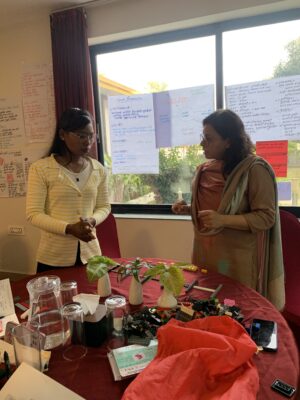 The masterclasses commenced with a warm and inspiring welcome from Dr. Padmakshi Rana, Executive Director of Impact Hub Kathmandu on the 10th of February, 2026. In her opening remarks, she introduced participants to the Hub’s vision of fostering impactful solutions and supporting entrepreneurs who are shaping a more resilient future. She emphasized that Impact Hub Kathmandu is more than a workspace, it is a collaborative ecosystem where bold ideas are nurtured, diverse perspectives are valued, and young changemakers are empowered to create lasting social and environmental impact.
Her message underscored a central belief of the incubation: that climate resilience and economic opportunity are not separate goals, but interconnected pathways toward sustainable community development.
Human-Centered Design in Action: A Three-Day Sprint
As part of the incubation journey and the second masterclass, participants engaged in an intensive three-day Human-Centered Design (HCD) Sprint facilitated by Prina Bajracharya, a product designer and compassionate educator. The sprint served as a foundational experience, equipping incubatees with practical tools and a mindset centered on empathy, problem discovery, and solution validation.
Rather than jumping directly into building products, the sprint encouraged participants to pause, listen, and deeply understand the communities they aim to serve. Through guided exercises, field insights, stakeholder mapping, and collaborative ideation, the young entrepreneurs were able to define real-life problems rooted in lived experiences. They explored the everyday climate challenges faced by farmers, women, and local households in Bardiya, identifying gaps that often go unnoticed but hold significant potential for impact.
Under Prina’s facilitation, participants learned to reframe assumptions into insights, transform observations into opportunity areas, and test early concepts through rapid prototyping and feedback loops. The process helped them shift from solution-driven thinking to problem-driven innovation, ensuring that their ideas are not only creative, but relevant, feasible, and grounded in actual community needs.
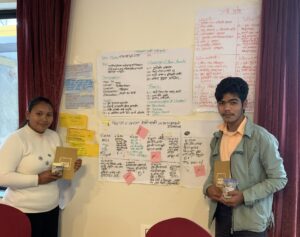
By the end of the sprint, each incubatee had developed a clearer problem statement, a refined value proposition, and early-stage prototypes that reflect climate-smart and livelihood-focused solutions. More importantly, they embraced a human-centered approach that will guide them throughout the incubation and beyond.
This HCD sprint laid the groundwork for building enterprises that are not only environmentally sustainable, but also socially responsive and community-informed, strengthening the likelihood that these innovations will create meaningful and lasting impact.
Building Climate Resilience from the Ground Up
As climate change continues to affect agriculture, livelihoods, and local economies across Nepal, grassroots innovation becomes increasingly essential. Programs like the “Incubation of Ideas on Climate Smart Livelihood Solutions” demonstrate that solutions can emerge from within communities themselves, when young people are equipped with the right skills, mentorship, and support systems.
By enabling youth-led climate-smart enterprises in Bardiya, Impact Hub Kathmandu is not only supporting six individual entrepreneurs, it is helping to lay the foundation for a more resilient, inclusive, and sustainable local economy. Through innovation, collaboration, and community-rooted entrepreneurship, the program aspires to turn climate challenges into opportunities for growth and transformation.
As the incubation progresses, these six emerging entrepreneurs will serve as catalysts of change, proof that with the right ecosystem, bold ideas can evolve into impactful ventures that strengthen both livelihoods and the planet.