A Vision for the Future: More Than Just Tools
In the heart of Surkhet, a new chapter of innovation has begun at the Kopila Valley School (KVS). With an exciting collaboration between the Kopila Valley Sewa Samaj (via the Futures) program and Fablab Nepal (Impact Hub Kathmandu), the school has managed to set up a state of the art Makerspace.
The project was developed based on the core ideas that Makerspace is not just a set of high-tech equipment, but a haven where imagination and solutions can be created. As one participant poignantly reflected during the training, “If makers are the ones who make something, then aren’t we all makers? After all, we’re always making – whether it’s something tangible or just making our lives the way we want”. This spirit of making would be the philosophical guiding ethos of the whole project; the in-between-ness of the skills of the technical workshop and the art of living.
The Blue print: An Accessibility and Safety Foundation
The physical transformation of the space was led by engineers from Fablab Nepal and Futures, who designed a custom layout focusing on high performance and inclusivity. Every element of the infrastructure was carefully considered:
- Accessible Workstations: Stations were designed for mechanical assembly and soldering to be efficient and inclusive, allowing all students to experiment without physical barriers.
- Professional Equipment: The space is equipped with high-capacity 3D printers, professional-grade electronics, and manual tools.
- Built-in Redundancy: The lab is designed to accommodate large groups and thus has multiple sets of tools so that students do not have to wait until a printer or soldering iron is free.
The focus on safety was made a long time before the arrival of the physical tools. In June 2025, an online session for KVS teachers established that safety is a shared cultural mindset rather than just a list of rules. The training led to the implementation of the Hierarchy of Controls, where the staff were trained on how to control hazards by eliminating them, engineering solutions, administrative solutions such as Lock-Out/Tag-Out (LOTO) and lastly, Personal Protective Equipment (PPE).
The Five-Day Intensive: Theory to Reality
In November 2025, a team from Fablab Nepal, led by Denjing Tamang and Sanjeev Lamichhane, travelled to Surkhet for an intensive, five-day Training of Trainers (ToT). Twelve educators participated in the program, which was designed to move from conceptual foundations to hands-on mastery.
Day 1 & 2: Grounding and Design Thinking
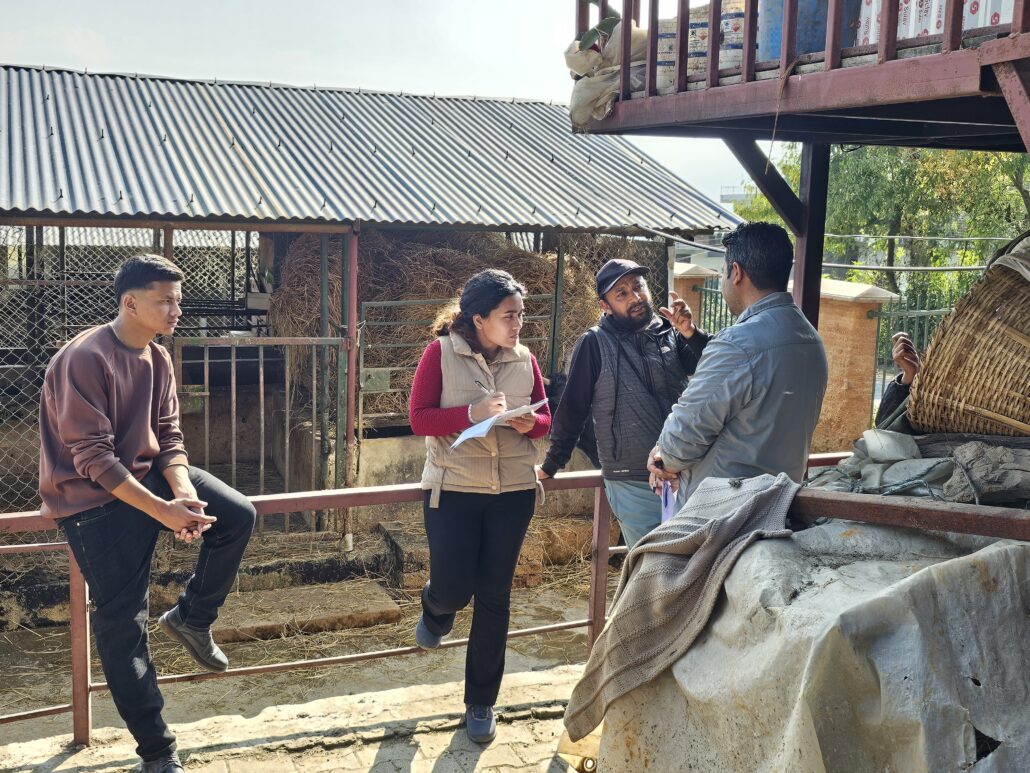
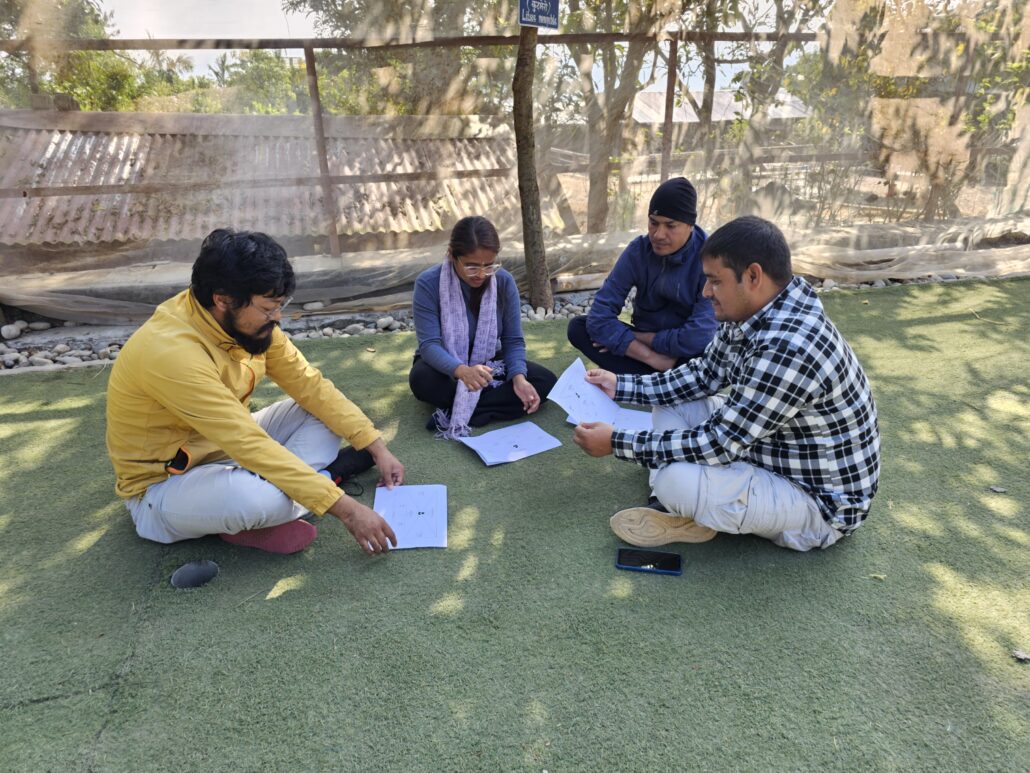
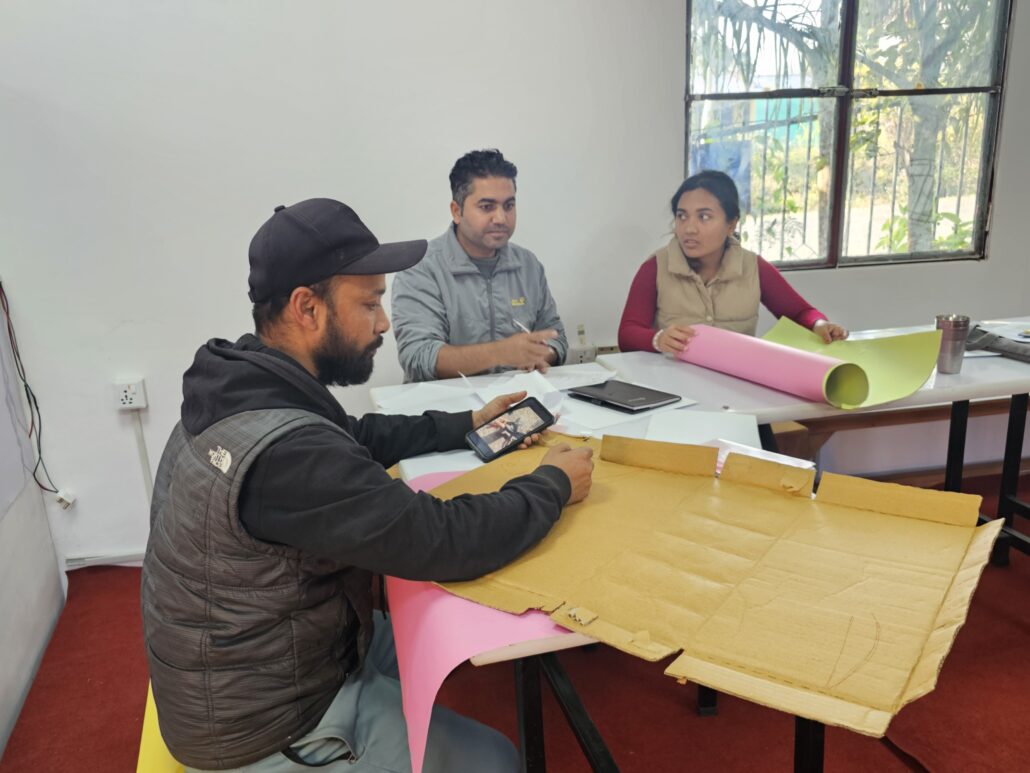
The journey began with a rigorous inventory check and an introduction to the culture of fabrication. On the second day, the focus shifted to Human-Centered Design (HCD). Educators were taught that innovation is often a “messy, non-linear” process. They practiced empathy mapping and rapid prototyping, identifying real-world campus challenges such as knee pain among staff or pest control in storage rooms.
Day 3 & 4: Electronics and “Smart” Innovation
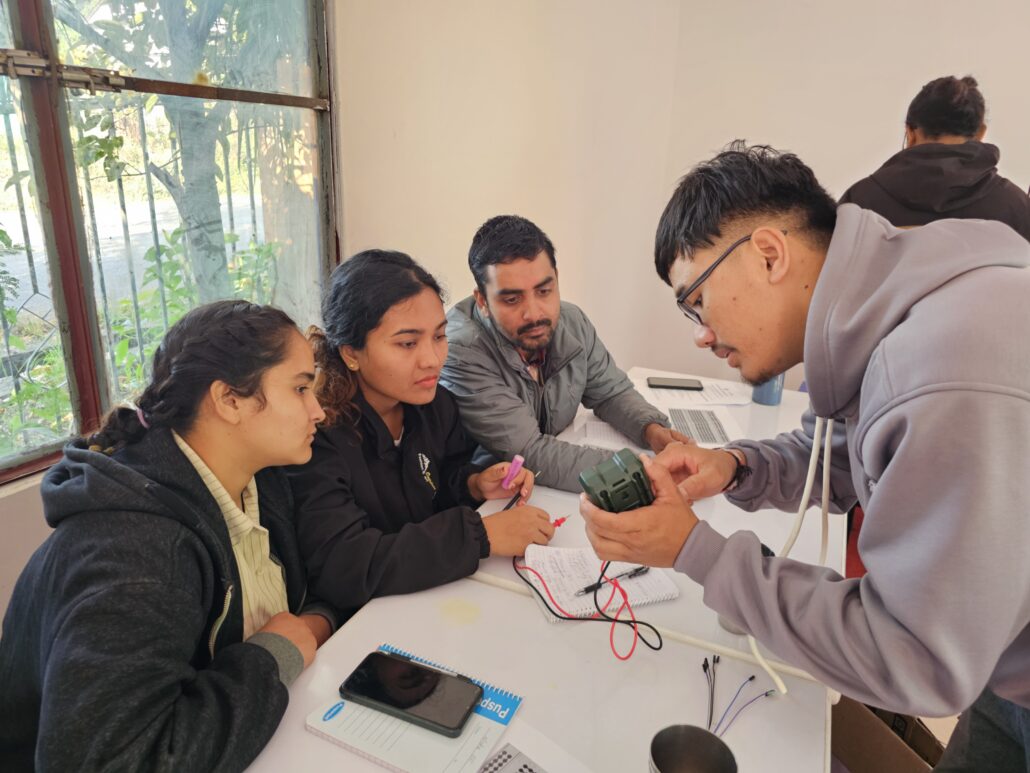
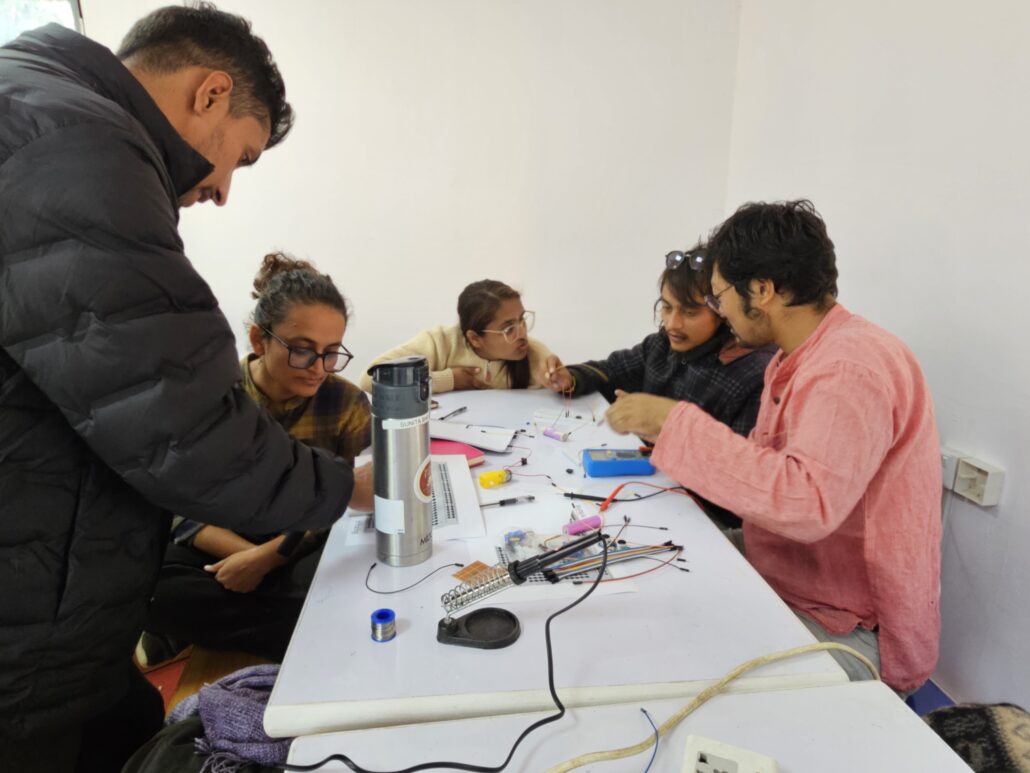
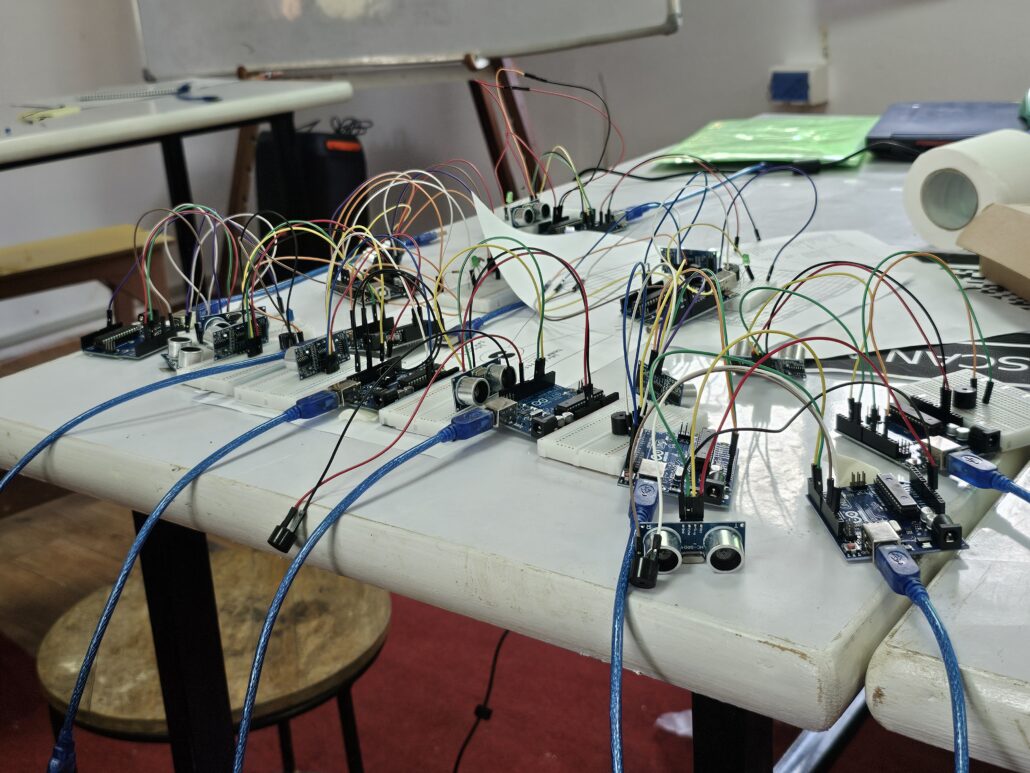
The middle of the week brought a deep dive into electronics. The participants were introduced to the fundamentals of current and polarity, and later constructed circuits on breadboards, and soldered them to perf boards- some of the first such experiences with many. The introduction of the Arduino Uno which is termed a “tiny computer” enabled teachers to switch to digital programming. The participants brought their code in practice by means of Tinkercad virtual simulation and subsequent production of physical smart alarms with ultrasonic sensors.
Day 5: Sustainability and Graduation
The last day was dedicated to the Paper Recycling Process and discussion of how the Makerspace can be used to make the school more sustainable. The week ended with a graduation ceremony, which signified the shift of these teachers into the first official group of school members as the first cohort of Makers.
Embracing the “Squiggle Struggle”
The most memorable ideas of the training itself included the “squiggle struggle”, which is the confusion, looping and error doing are not the aspects of failure, but they are the key signs of real learning.
Although the reviews were very positive in terms of the supportive environment and patience of the trainers, they also highlighted the real challenges of technical education. It was observed by many of participants that although their projects worked, they nevertheless had a feeling of being lost when it came to the underlying code and circuit logic. This has come to the fore in the long-term plan of the space: learning by doing takes time.
The Kopila Valley Makerspace is now officially alive. It is an example of what can be done when a community takes up the challenge of creating something new and demonstrates that, with the correct tools and a maker mentality, anyone can shape their future.