
Climate change is reshaping the way we live, work, and sustain our communities. In Nepal, Generation Z (18–24 years old) represents not only the largest share of the population but also the future workforce driving social and economic transformation. To better understand their aspirations, challenges, and opportunities, Impact Hub Kathmandu, in collaboration with Plan International, conducted a scoping study in Bardiya and Kapilvastu districts under the initiative Elevating Ideation through Co-Creation.
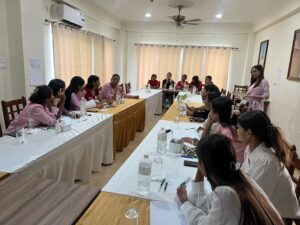
The study aimed to gain a comprehensive understanding of Gen Z’s awareness, aspirations, and perspectives on climate-smart livelihoods, particularly within Bardiya and Kapilvastu districts. It sought to explore not only how young people perceive climate change and its impacts on their daily lives and communities but also the kinds of careers and opportunities they aspire to pursue in the future. At the same time, the study set out to identify the key challenges and barriers that limit their engagement in sustainable livelihood practices, such as lack of access to training, financial resources, role models, or supportive infrastructure. Another important focus was to highlight areas of interest where young people see potential for meaningful engagement ranging from agriculture and waste management to green construction, eco-tourism, and renewable energy, while capturing their motivations to contribute to community well-being and environmental sustainability. Ultimately, these insights are intended to feed into co-creation workshops where youth will be positioned as equal partners in ideating solutions, and later into incubation processes that can transform their ideas into tangible, scalable, and locally relevant climate-smart enterprises.
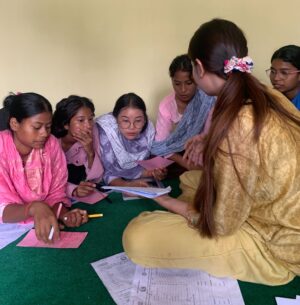 Bardiya and Kapilvastu, two districts of Lumbini Province, are largely agrarian communities where most households depend on farming and livestock for their livelihoods. Together, they are home to more than 127,000 young people aged 18–24, with Bardiya’s youth engaged in agriculture, forestry, and small industries, while Kapilvastu’s young population is also shaped by agriculture and vibrant border trade. Despite this strong agricultural base, limited local opportunities have pushed many young people to migrate abroad or to more developed cities in search of better prospects. Adding to these challenges, climate change has begun to disrupt traditional livelihoods through irregular rainfall, frequent floods, and declining soil fertility, pressures that are not only undermining agricultural productivity but also compelling youth to seek innovative, adaptive, and climate-smart alternatives to secure their future.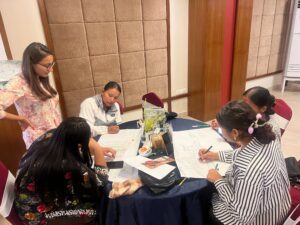
Through this scoping study, we successfully reached and engaged 163 young participants across Bardiya and Kapilvastu. Among them, an inspiring 128 were young women, 34 were young men, and 1 participant chose not to disclose their gender, reflecting the inclusivity of the process. The majority of these youth were students pursuing higher education, bringing with them fresh perspectives, ambitions, and ideas for the future. What made this engagement even more meaningful was the diversity represented in the group, with participants coming from varied social, ethnic, and economic backgrounds, including Dalit, Tharu, Madhesi, Janajati, and Muslim communities. This diversity ensured that the voices and lived experiences of marginalized groups were not only included but placed at the center of the study. Their active participation highlighted the eagerness of Gen Z to engage in conversations around climate change and livelihood opportunities, demonstrating both the urgency and the potential of investing in youth-led, climate-smart solutions.
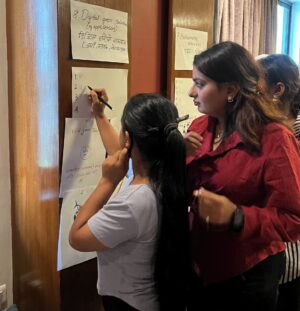 The study was carried out through a two-step process designed to both capture youth perspectives and translate them into action. First, the scoping study combined surveys, focus group discussions, and key informant insights. The next phase embraced a co-creation approach, where 50 youth actively participated in workshops to design innovative, contextually relevant, and climate-smart livelihood ideas. Instead of being treated as passive beneficiaries, young people were placed at the center of the process as equal co-creators, ensuring that the solutions developed are not only rooted in local realities but also carry the ownership and long-term commitment of the very communities they are meant to serve.
The team was thrilled to witness the enthusiasm of youth in Bardiya and Kapilvastu. However, one striking finding was that the aspirations of young people are shifting away from conventional occupations like farming, which are increasingly seen as subsistence-based, toward more modern professions such as banking, accounting, and teaching. While this shift reflects evolving social and economic realities, it also raises questions about how climate-smart livelihoods, many of which build on agricultural and natural resource–based opportunities, can be made attractive, sustainable, and rewarding for the next generation.
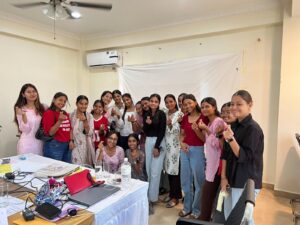
While this energy and curiosity around climate-smart livelihoods is gaining momentum, it is extremely important to maintain it. One of the key findings of the study was the lack of awareness regarding climate-smart solutions and the absence of local examples to inspire action. The focus, therefore, should be on capacitating youth with knowledge and role models drawn from within their own communities. This study should serve as an important reference point for institutions, climate experts, impact-driven entrepreneurs, and other stakeholders to take the necessary next steps and keep the conversation alive. We may still be in the early stages of shaping concrete modules for a sustainable future, but the critical question now is: what do we do with what we have learned so far?