The 52nd Environment Day, which falls on the 5th of June, was celebrated with much fanfare at Impact Hub Kathmandu (IH KTM). With plastics being one of the major issues plaguing the planet, this year’s Environment Day slogan was aptly named #BeatPlasticPollution. This was a great opportunity for IH KTM to showcase the excellent work being done in the plastic recycling sector. Led by the incubatees of the Plastic to Ghar (P2G) project, KleanIt Upcyclers (KIU) and Paramendo, the event held at IH KTM’s premises centered around the main theme: “Plastic: From Used to Useful.” The event had three major attractions: live recycling, a marketplace, and a talk session.
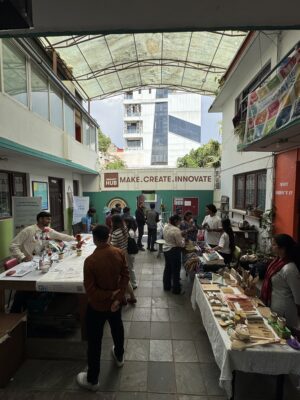
The event started at 11:00 AM, with all the stall vendors setting up their respective stalls. The marketplace featured stalls ranging from upcycled sarees and jeans to eco-friendly bamboo products, cosmetics, and recycled plastic products. A total of 10 inspiring enterprises @ecosathi_nepal , @hattihatti_npo, @paramendonepal , @re.kriti, Bikalpa, gd_labs_and_research , @kleanit_upcyclers, and @ecofamilynepal , brought their innovative, sustainability-driven products to the Circular Bazar. They all shared a common theme, transforming discarded materials into something useful and promoting environmentally friendly alternatives.
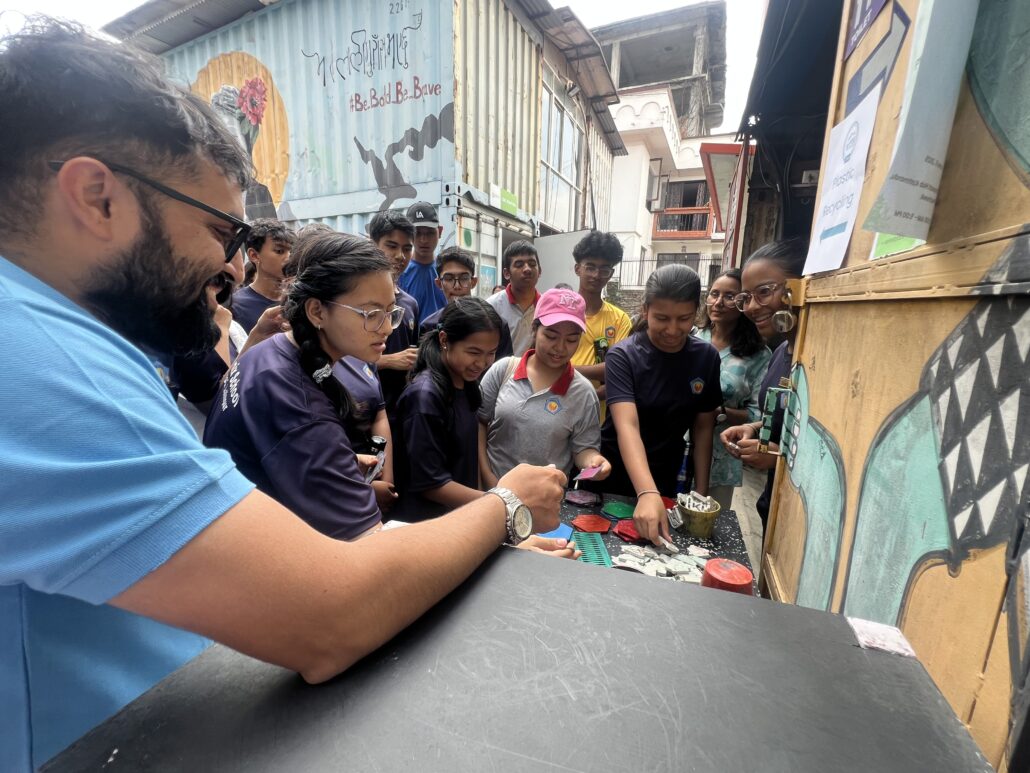
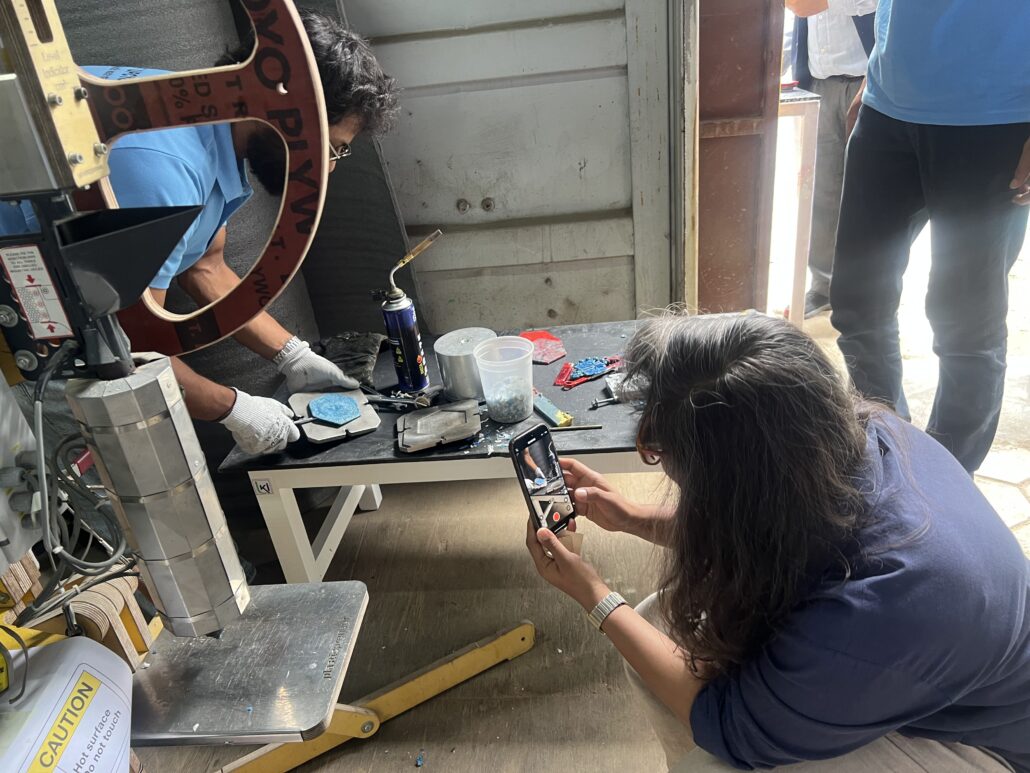
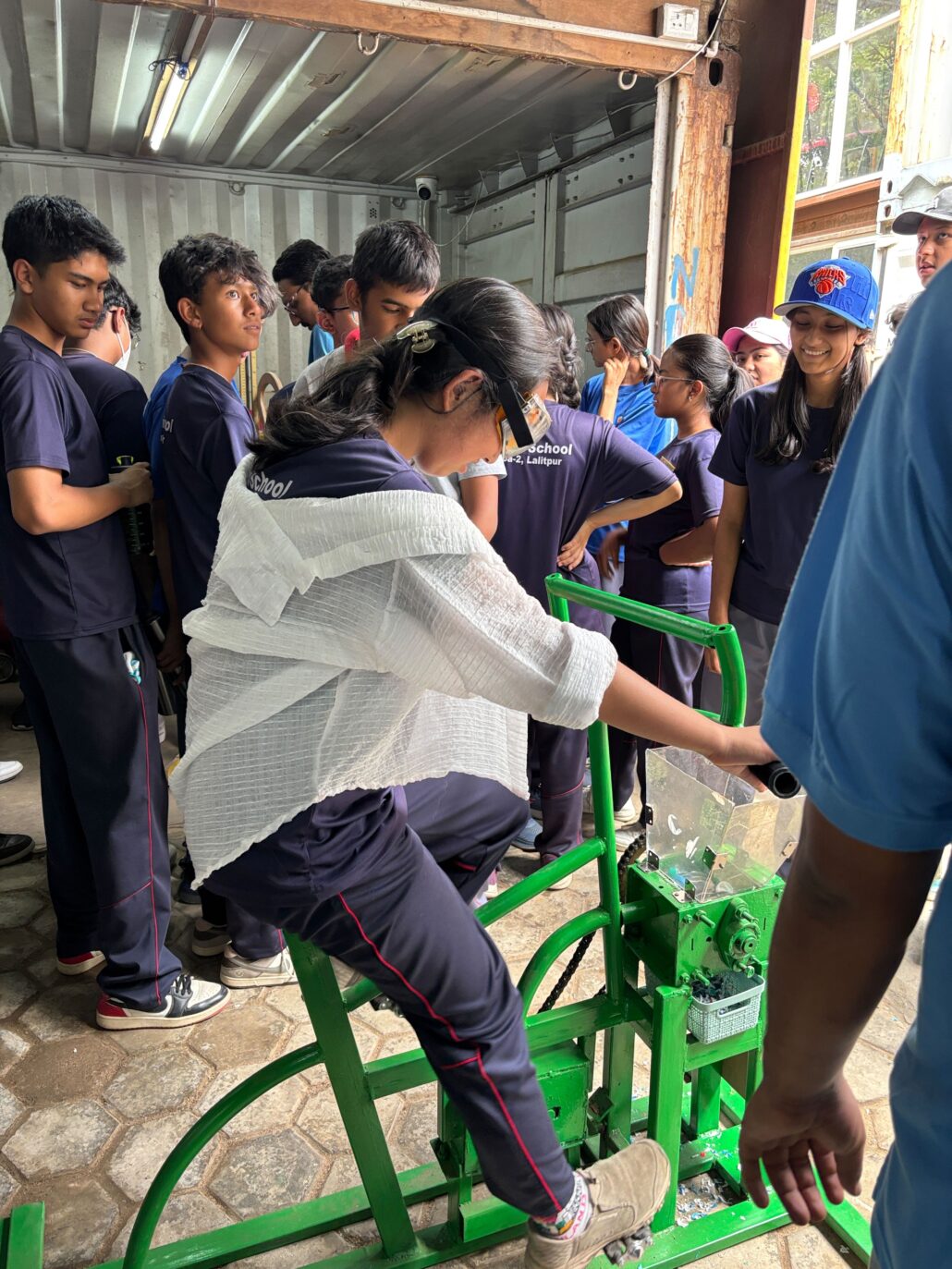
Another great attraction of the event was the live recycling demonstration that took place throughout the day at FabLab Nepal’s maker space. This segment, spearheaded by KIU, aimed to show how simple machines and processes can be used to recycle plastics. They showcased two machines: a cycle shredder and an injection machine. The cycle shredder was designed by KIU, and the injection machine was designed by FabLab. This demonstration drew significant engagement, especially from school students, many of whom tried out the cycle shredder.
Finally, the talk session, titled “Behavioral Shifts for Circular Futures,” was an hour-long discussion intended to shed light on the interrelatedness between human behaviour and waste management. The main speakers were Sunny Rajopadhyaya (KIU | Program Manager), Areena Tuladhar (KIU | Branding & Marketing), Sajana Jirel (Hatti Hatti Nepal | Executive Director/Co-Founder), Rohan Shrestha (IH KTM | RoC Programme Officer), and Pratik Kharel (Eco Family | Chief Business Officer). The session was moderated by Rahul Bisunkhe of Paramendo, who introduced Paramendo and the work they have been doing in Ree Village of Dhading. Setting the tone for the session, Rahul segued into the panel discussion.
Despite regular training and awareness programs, the deeply ingrained habits of littering and improper waste management continue to persist. The panel emphasized that much of the current effort targets individuals rather than holding producers accountable. Sunny highlighted the lack of Extended Producer Responsibility (EPR) and shared examples such as incentivizing the return of milk packets. He stressed that even small incentives can create large shifts in behavior. Sajana echoed this by underscoring the importance of cultivating responsibility in the younger generation through action-oriented awareness. Rohan reflected on his experience with early childhood environmental programs and noted how community engagement often depends on the activeness of the local municipality. Pratik emphasized that schoolchildren are the strongest agents of change, but they, too need to be incentivized, reminding everyone that waste is a shared public concern, not a private one.
When asked why people in rural areas should prioritize waste management despite lacking even the most basic necessities, the panel offered some powerful insights. Pratik explained that waste is directly linked to health and should therefore be seen as a basic need. In many cases, fear, particularly of health consequences, has proven to be a strong motivator in rural awareness campaigns. Rohan returned to the idea of incentivization, suggesting that it might be the most viable pathway to encouraging community action. He added that blame is a common reaction in these contexts and needs to be addressed constructively. Sunny urged the need for simplicity, meeting people where they are and reframing waste management in terms of basic needs like food, shelter, and clothing, rather than using complicated terminology.
Addressing the challenge of creating effective rural waste management policies without burdening communities requires contextual sensitivity and inclusive approaches. Pratik pointed out that change cannot be driven by a single individual; it requires consistent engagement with government officials, even when their receptiveness varies. One-size-fits-all approaches are ineffective, and hyper-localization is key. Sajana spoke about the need to recognize that certain types of waste, like clothing, are not viewed the same way in rural contexts, highlighting the lack of policy-level engagement in these spaces. Rohan stressed that policies should be designed by and for the people they intend to serve. Sunny added that many sustainable practices were once naturally embedded in rural lifestyles, suggesting that policy can build on this inherent knowledge. The session concluded with a reflection that innovation often comes first, while policy tends to follow, reinforcing the importance of community-led experimentation as a foundation for future regulation.
The event ended successfully, engaging more than 100 people from the school level to people from different organizations.