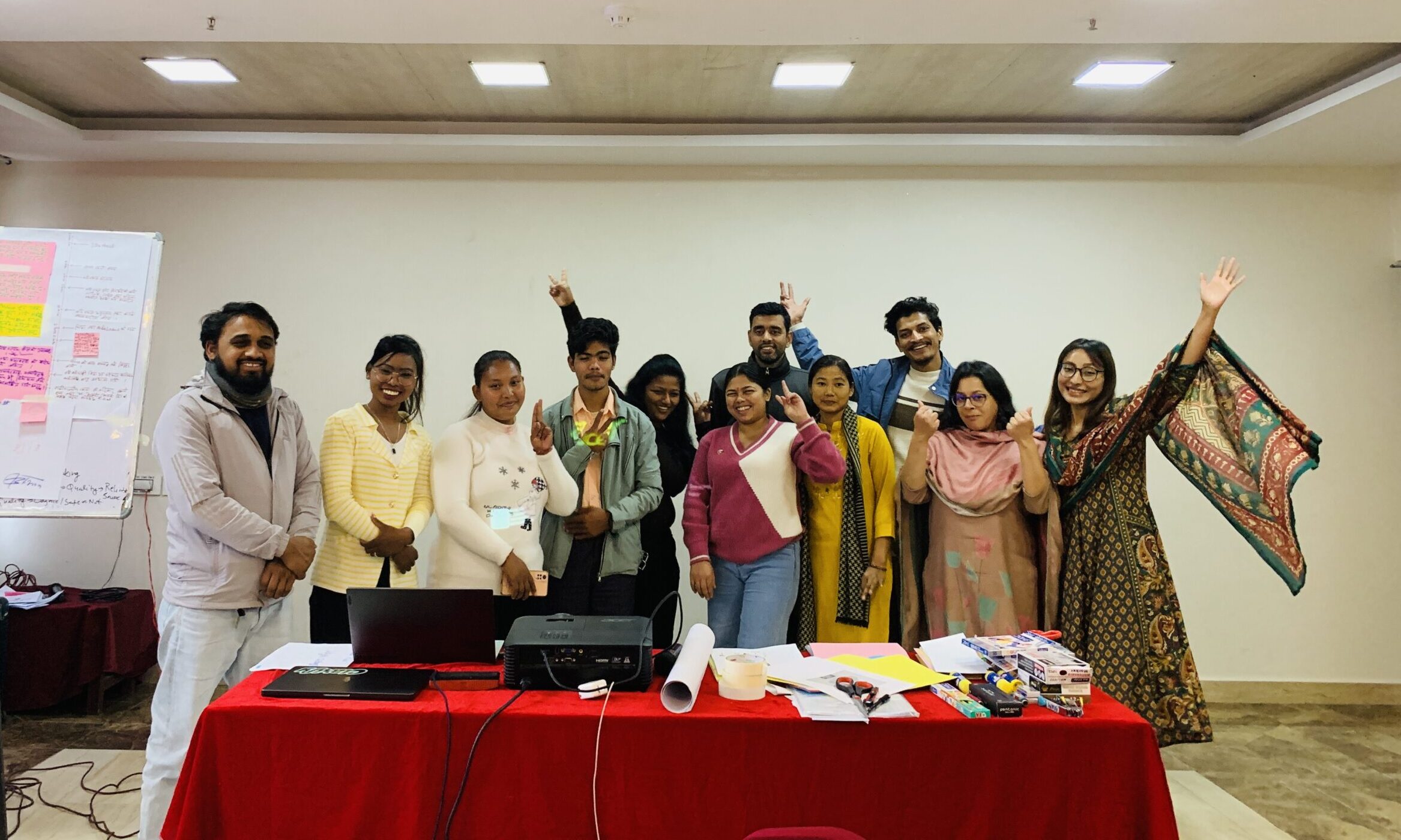
A big looming question mark hung over the room: what if engineers, students, occupational therapists, caregivers and people with disabilities come together to create Assistive devices that were contextual? What if the people closest to the problem were also the ones building the solution?
The Nepal Assistive Device Makeathon, organized by Impact Hub Kathmandu and Design Lab, Kathmandu University with support from the Asian Development Bank, tried to answer that question not with just a theory but with three days, twelve 3D printers, and about a hundred people willing to find out. At the heart of it was a simple but radical premise: put the person with disability at the center of the design process, not at the end of it. Each team had a “need knower”, someone whose life the device was meant to improve, and their voice shaped everything from day one.
But the questions raised during the makeathon didn’t end when the room emptied, they grew further. Could the same human-centered spirit be carried into something in a more sustained way? Could locally made assistive devices, built with and for people with disabilities, become not just a makeathon outcome but a lasting model of care?
Building on these reflections and learnings, we are proud to announce the launch of “Empowering Independence through Local Assistive Technology Innovation for Persons with Disability due to Spinal Injury”, which is a research and development initiative in collaboration with Spinal Injury Rehabilitation Centre, Sanga. Started in February 2026, this initiative will run for a year, with the funding from Royal Academy of Engineering awarded in December 2025 under UK Aid-funded AT2030 programme. The project’s goal is straightforward: to design and develop locally made assistive devices that gives people with spinal cord injuries (SCI) a greater degree of independence in their daily lives. Assistive Devices that are built here, shaped by the people who will use them, and tested in their day to day life.
In a moment, either through a fall, an accident, or a medical error causing SCI, a person’s relationship to his/ her own body is transformed. Mobility, sensation, and function that were once considered automatic, must now be relearned, renegotiated, or replaced. Yet for many people living with SCI in Nepal and across the developing world, the challenge doesn’t stop there. It is compounded, day after day, by a shortage of the right tools. Families and caregivers step in to fill what assistive devices could not, assisting with the most personal of daily tasks. Over time this relentless caregiving takes a toll on their livelihood and wellbeing, making SCI not just an individual burden but a deeply shared one.
The numbers are difficult to look away from. Globally, over 2.5 billion people require Assistive Technology (AT) (World Health Organization [WHO] & United Nations Children’s Fund [UNICEF], 2022)1, but in low- and middle-income countries only 5–15% can access appropriate devices (Matter et al., 2016)2; (WHO, 2018)3. In Nepal, while 27.7% use AT, unmet need remains high at 19.7%, rising to over 70% among those unable to perform daily activities independently (Paudel et al., 2023)4. For individuals with spinal cord injury (SCI), the lack of appropriate, well-fitted devices often leads to exclusion and dependence. Existing solutions are frequently imported, costly, and poorly suited to local contexts, contributing to abandonment rates of up to 75% (WHO, 2018; WHO & UNICEF, 2022). Barriers such as out-of-pocket costs, limited rural access, and shortage of trained professionals further widen the gap. In this context, locally developed AT offers a more sustainable path; reducing costs, improving usability, and supporting long-term independence while also delivering strong social and economic returns.
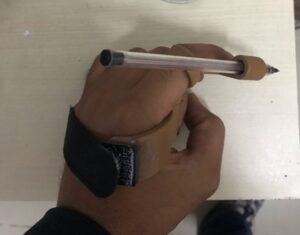
Assistive Technology is a broad term; it encompasses any product, system, or service that helps a person with a disability function more independently. An assistive device is the tangible expression of that: the wheelchair, the grip aid, the adapted mouse, the palm supporter. Assistive Technology sits at the intersection of engineering, clinical care, and lived experience. Which is the reason why collaboration is not only a feature but a structure of this project. People with Spinal Cord Injury will be our primary voices and co-designers, who will shape the solutions that they will use. Our technical team will be supported by a multidisciplinary group of specialists: Occupational Therapists (OTs),whose main focus won the practicalities of daily function, motor skills, and how a device translates to real-world independence; Prosthetists and Orthotists (P&Os), who will bring essential technical expertise in biomechanics, material strength, and custom fitting; and Physical Medicine and Rehabilitation (PM&R) specialists, who will provide the overarching clinical perspective to ensure that every manufactured device safely supports long-term health and recovery.
In the longer term, the ambition is not just to produce several well-designed devices, but to demonstrate a model: that human-centered, locally developed assistive device is achievable in low-resource settings, that it can provide a different support system for the imported alternatives, and that the expertise to build it can be grown and sustained here locally.
If you are or you know someone who is: a clinician, a researcher, a donor, a person living with Spinal Cord Injuries, or simply someone who believes that the right tools should be available to everyone who needs them, you can reach out to collaborate.